Footy Books

Holy Boot blog-Books

Footy books. I have hundreds of them. Sourced from op-shops, fetes and second hand book stores. I even shell out for the odd new book. My books don’t just sit their gathering dust either, I give them a good working over where possible.
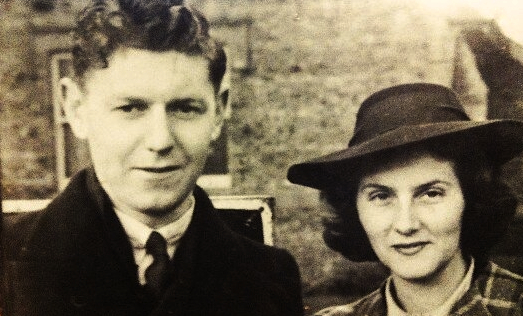
Nana and pa

My nana and pa in their Richmond days

My love of both footy and its reading material stems back to my nana and pa’s house in Forest Hill. Old Richmondites, they ‘migrated’ like many from the suburb labelled ‘Struggletown’ to the south-east and finally eastern suburbs of Melbourne. Amongst books on gardening, Australian history and the odd Agatha Christie novel sat a clump of books on our great Australian game. I spent many hours poring over these books, and they have shaped my love of the game, it’s history, it’s social meaning, it’s sense of humour.
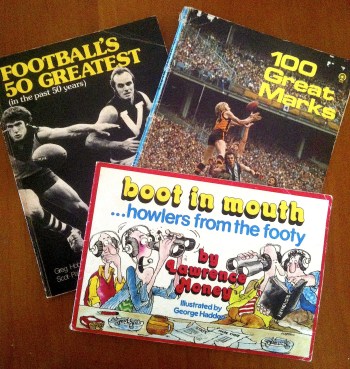
Holy Boot Blog bookss

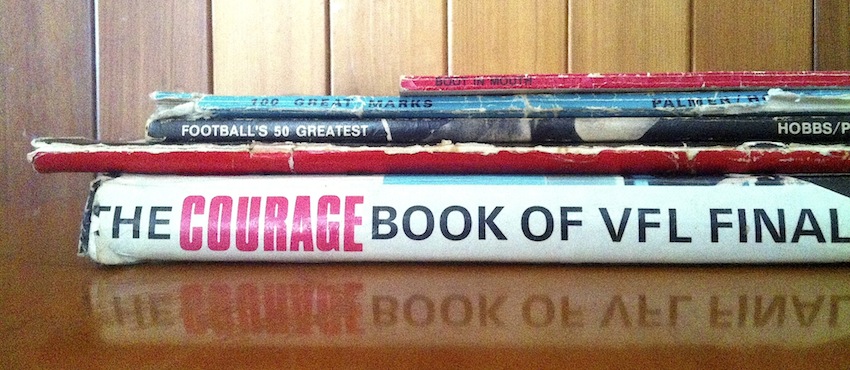
Some of my nana and pa’s footy book collection

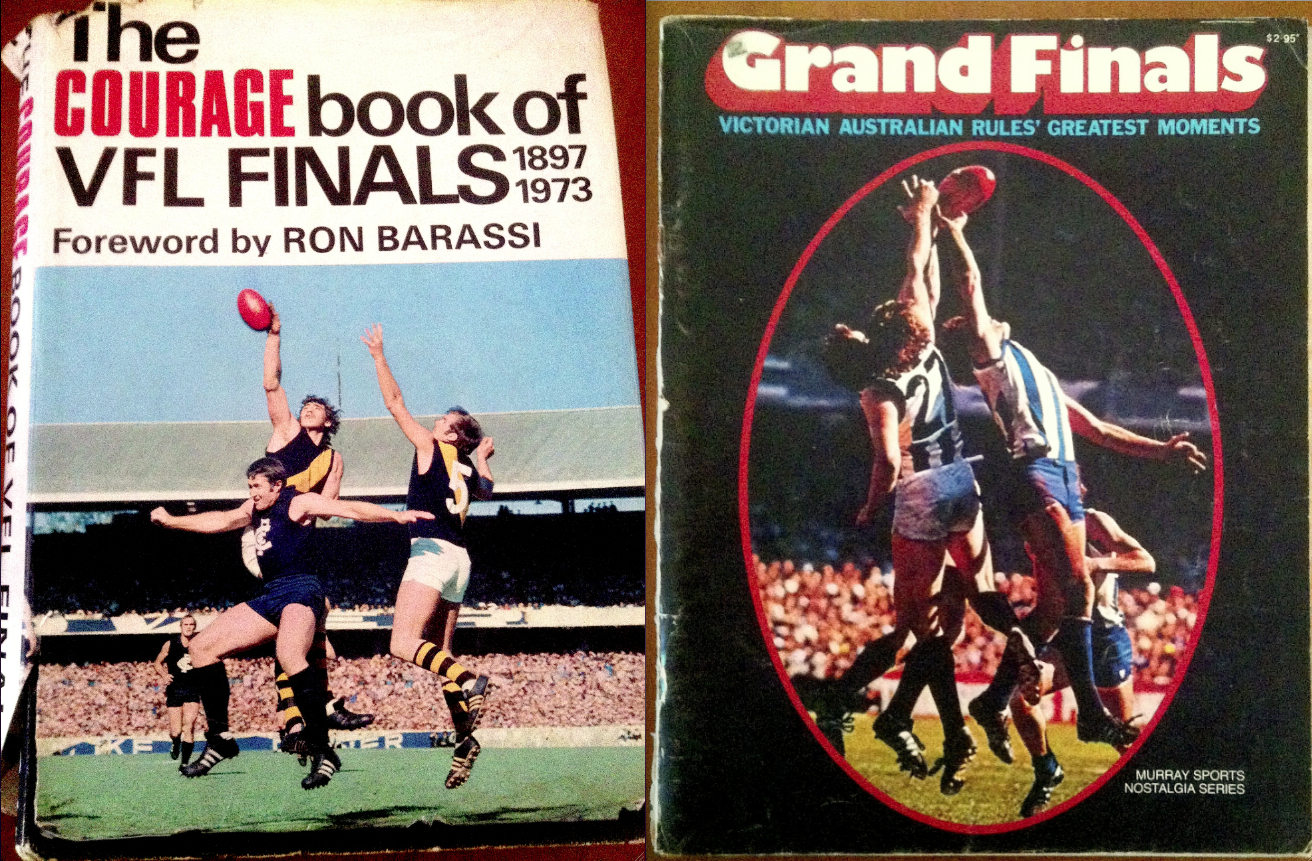
I’m going to focus this post on the two books which most captured my imagination; The Courage Book of VFL Finals-1897-1973 and Grand Finals, Victorian Australian Rules Greatest Moments. Both are similar in that they move chronologically through the history of the VFL, and I often read them in tandem. They say a picture tells a thousand words, and as a young boy, it was mostly the pictures I focussed on, along with the match details. As such I’m still yet to read much of the text!HOLY BOOT Books combine
When my grandparents sadly passed, I snaffled the Courage book of Finals , and the below photo is a great memory I have of my nana. You could hardly touch one of her books without a plethora of related news clippings tumbling forth.
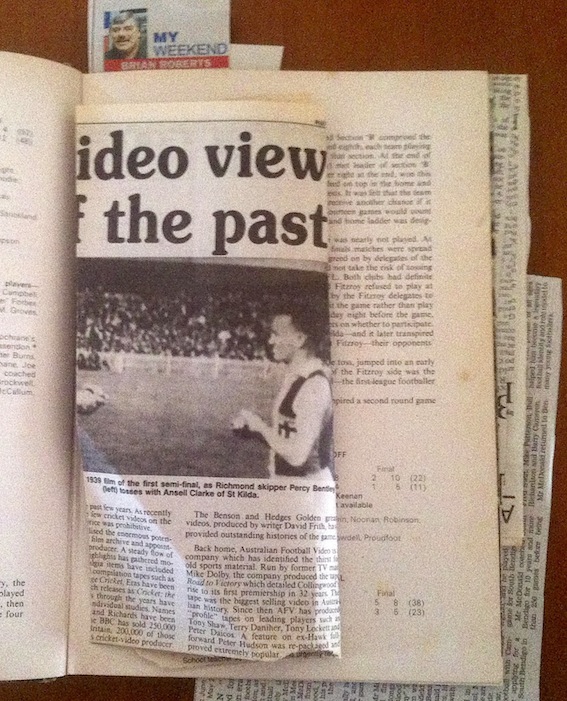
Holy Boot Blog nana boook

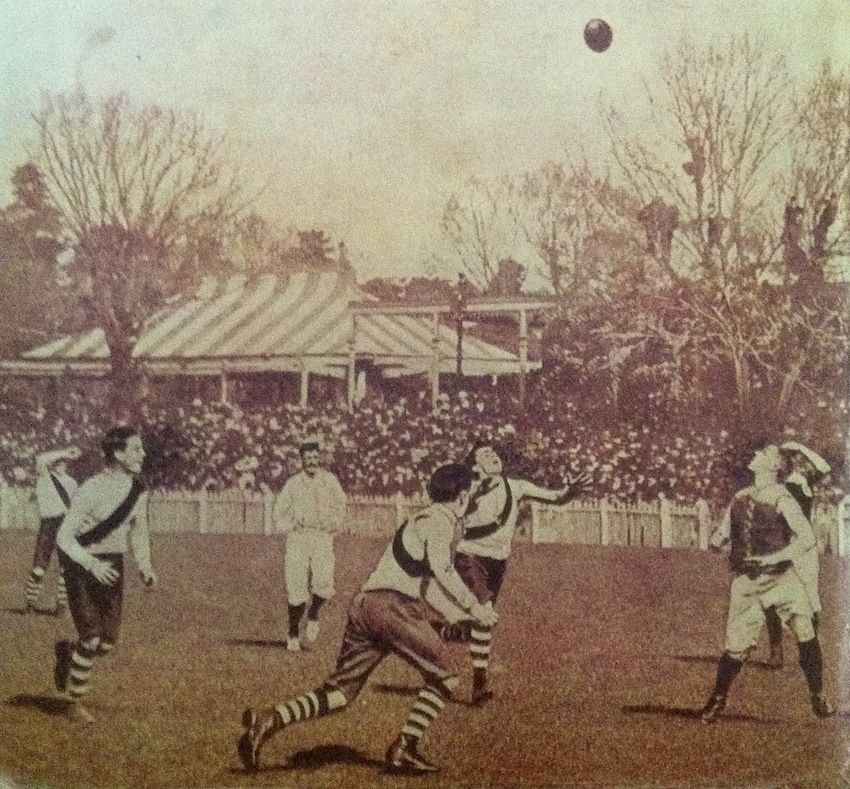
Below is a photo of the 1907 grand final between Carlton and South Melbourne which sits on the back cover of the book of finals, opposed to the ‘current’ image (1973) on the front. I looked at this photo endlessly as a boy, trying to comprehend just how the marquee styled pavilion and treed terraces was in fact the same MCG I grew up with, a concrete jungle.

What strikes me is the carnival atmosphere this photo captures. People up trees to gain a better vantage point, trees which are positioned in front of the pavilion and grand stand, the warm September sun as Melbourne emerges from the depths of winter. What you’re looking at is in fact the precursor to the old and new Southern Stands. I’m still mesmerised  by this photo.
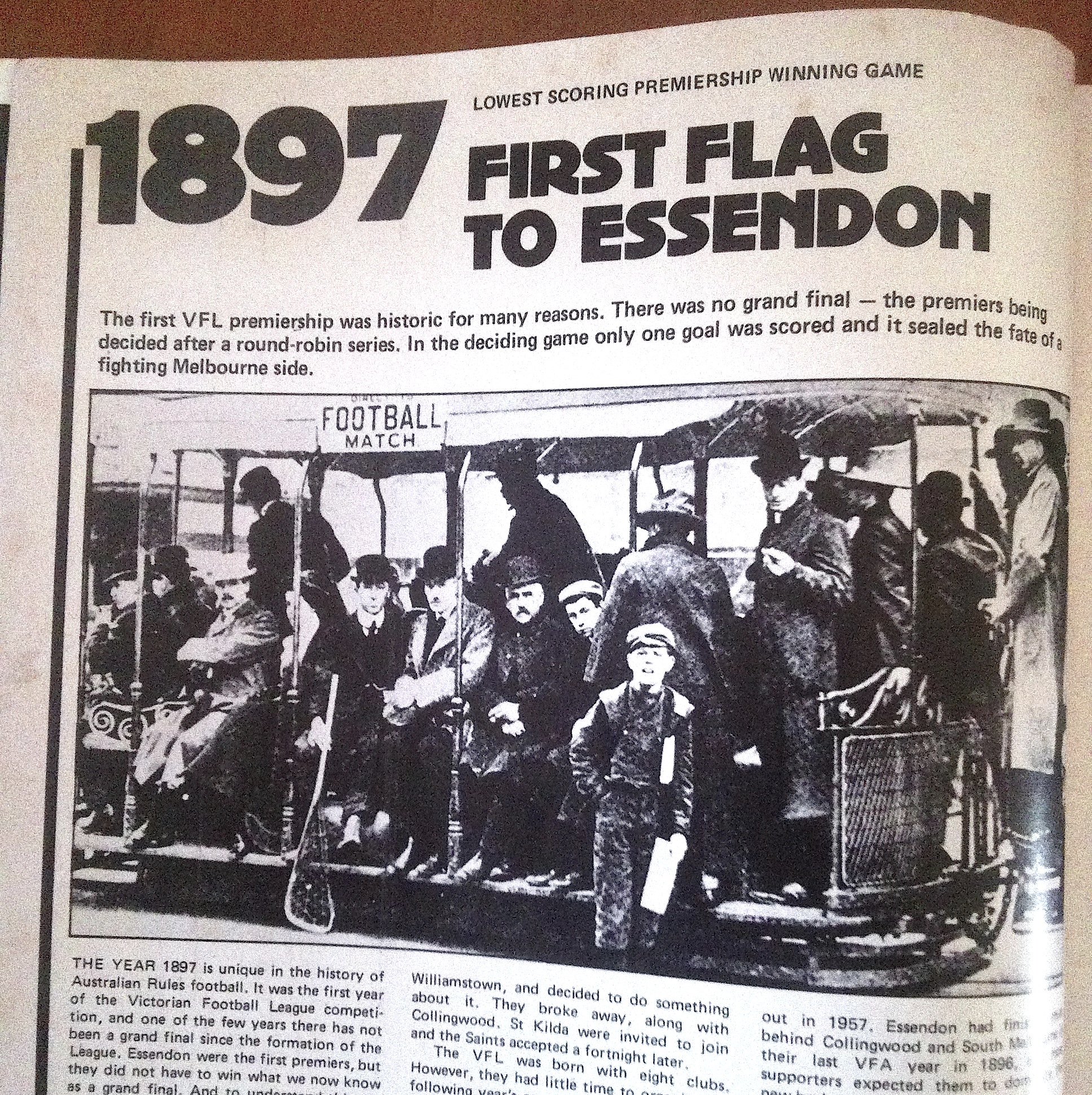
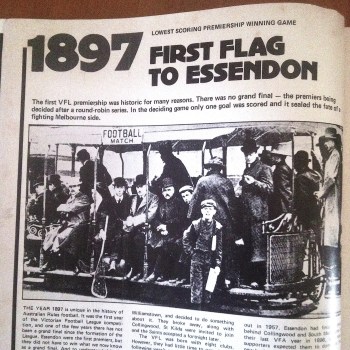
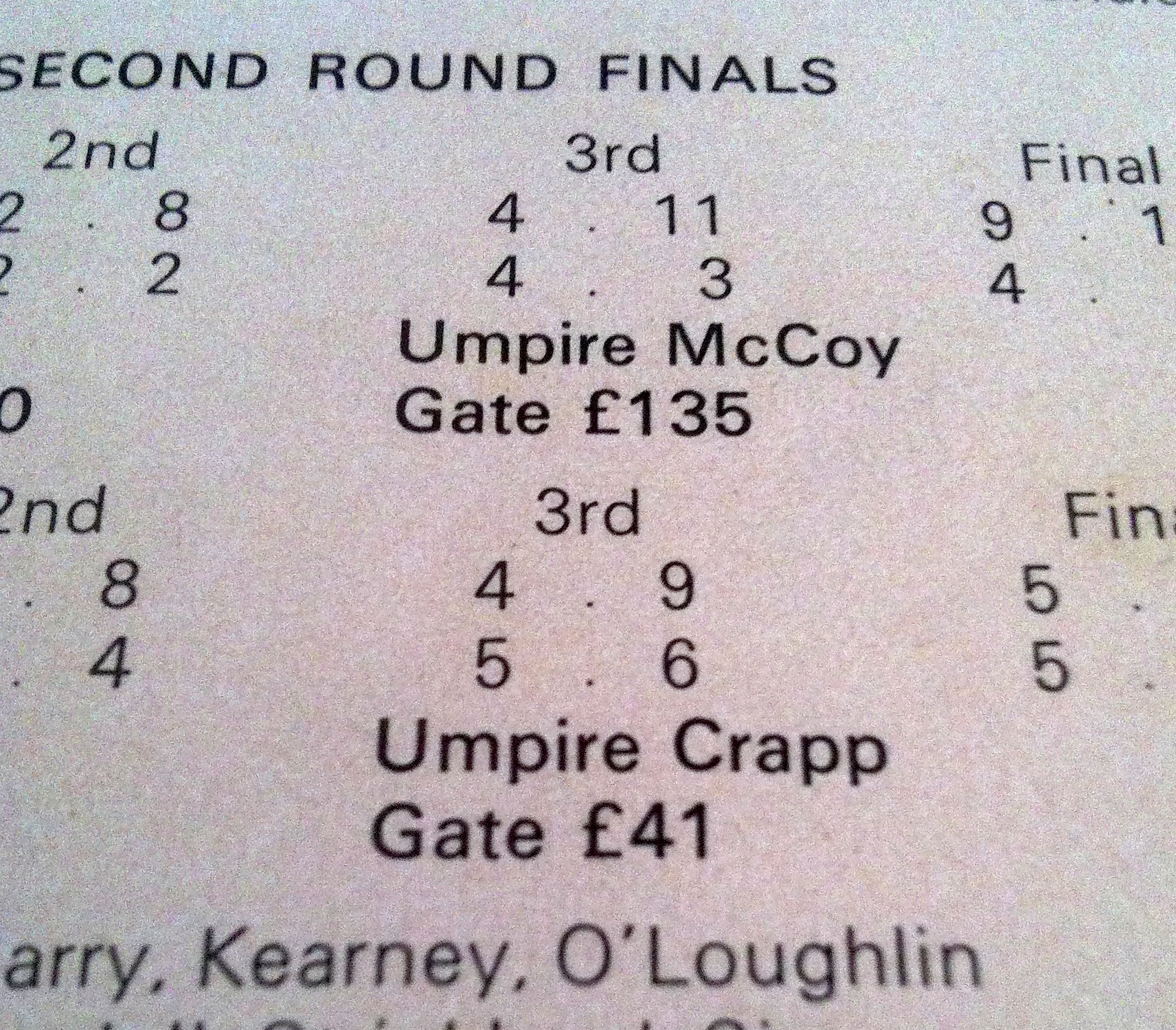
1909 2This photo of the packed footy tram is a classic, though not necessarily connected to Essendon’s 1897 flag. It says to me that as much as things change, they also stay the same. Stripped back, it’s a photo of football supporters on their way to the footy by tram. I did that myself a number of times last year.1897Something that of course made me snicker as a youngun’ was the fact that the bulk of early grand finals in the VFL were umpired by Ivo Crapp. Still raises a grin. To the untrained eye it may appear however to be a brief report on the days work by the man in white.
1900

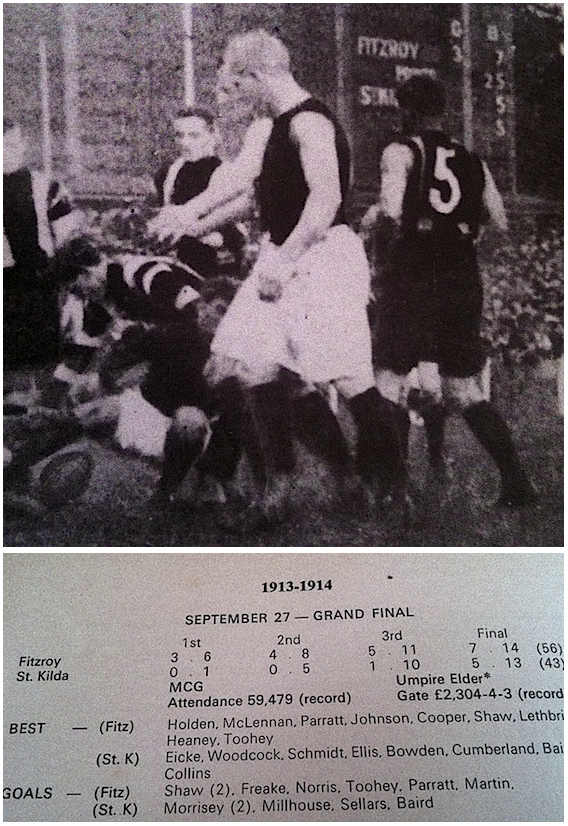
From sifting through these old pictures, scores and words as an impressionable child, a deep impact has been made. I was intrigued that Fitzroy was the early powerhouse of the VFL, was amazed that St.Kilda took years to actually register a single victory, and even more amazed that the two clubs played off the the 1913 grand final! How different things could have been had the Saints gotten up? The below photo also shows a great shot of the scoreboard which sat in the forward pocket a the punt road end of the MCG, not all too far from where the kids play up at the cricket these days.

For more reading on the MCG scoreboards and 1913 grand final, these are some fantastic posts on the scoreboard pressure blog.
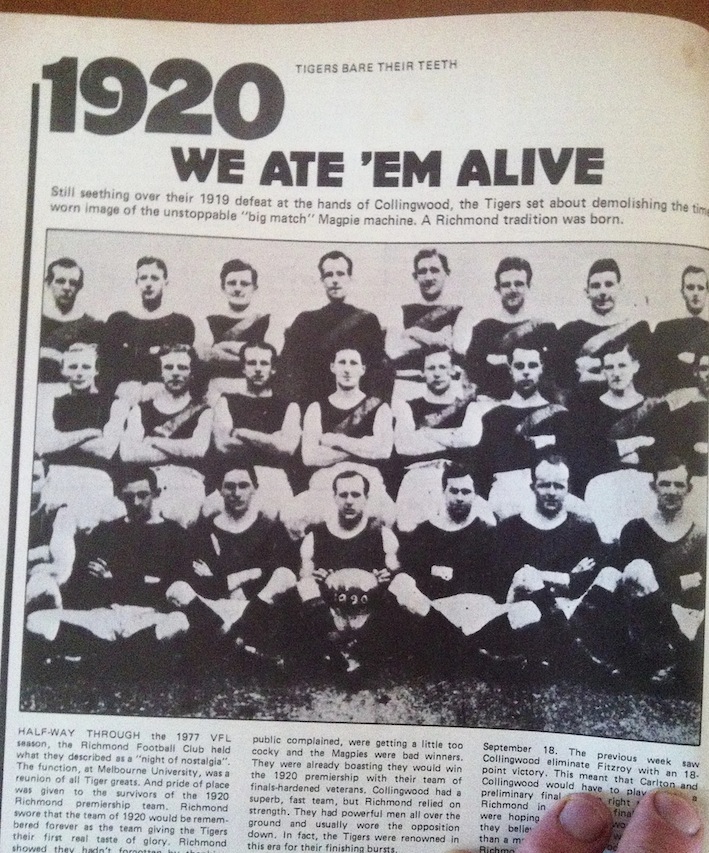
HB Fitz v St.K 1913As a young Tiger growing up in a Tiger household, I stopped often at the Richmond premiership years, and 1920 in particular. The phrase ‘We Ate ’em Alive’ was born after beating the hated rival Collingwood, who’d the previous year downed the Tiges in the big one. My nana still lived with a hatred for Collingwood born from the streets of Richmond, and as both my grandparents were born in 1920, I always found this page a bit special.1920A quick peruse of this site should quickly reveal that I have a thing for old footy grounds. Well much of that too can be traced back to hours spent trawling through these books, pouring over grainy old photos such as these.
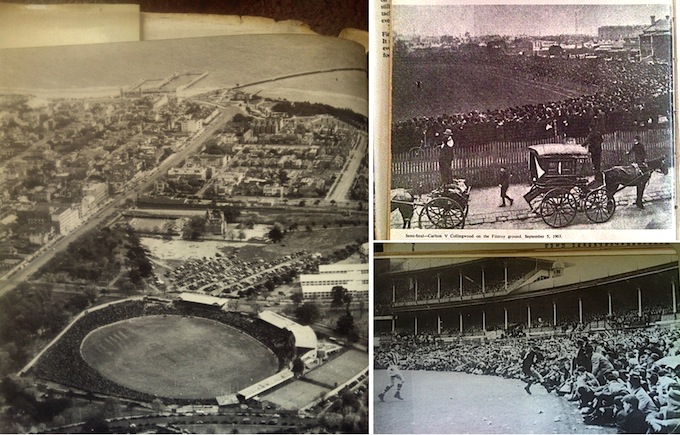
HB footy grounds books

The photo on the left is of the Junction Oval on grand final day 1944, Fitzroy defeating the Tiges to claim their final league flag. It’s hard to spot them, but my grandparents, my nanas sisters and cousins, they’re all there. And why a grand final at the Junction Oval I hear you ask? Well the MCG was out of bounds, home to American and Australian troops amid World War 2.

The photo in the top right corner takes us to Fitzroy’s Brunswick Street Oval for the 1903 semi-final between local rivals Carlton and Collingwood, at a time when the MCG wasn’t the assumed home of finals footy that it was soon to become.

And below that is a wonderful still from the 1950 grand final between North and Essendon, another ‘forgotten’ grand final given North’s lack of success until the 1970’s. Imagine if Waverley Park could have seated people between the boundary and the fence!? Would have doubled the capacity!
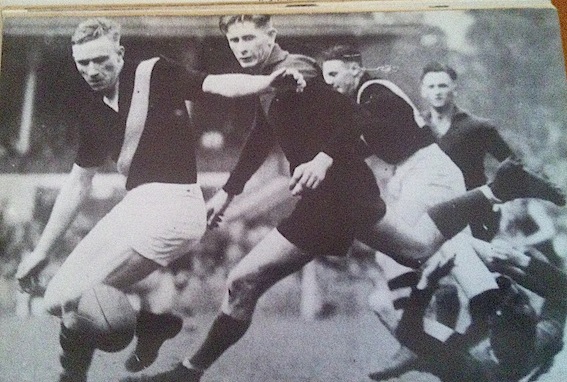
1939The composition of this photo always appealed to me, the fickle ball leading the players a merry dance as it tumbled this way and that. The Richmond player is Charlie Priestly, the Melbourne player more noted as a master coach, Norm Smith.
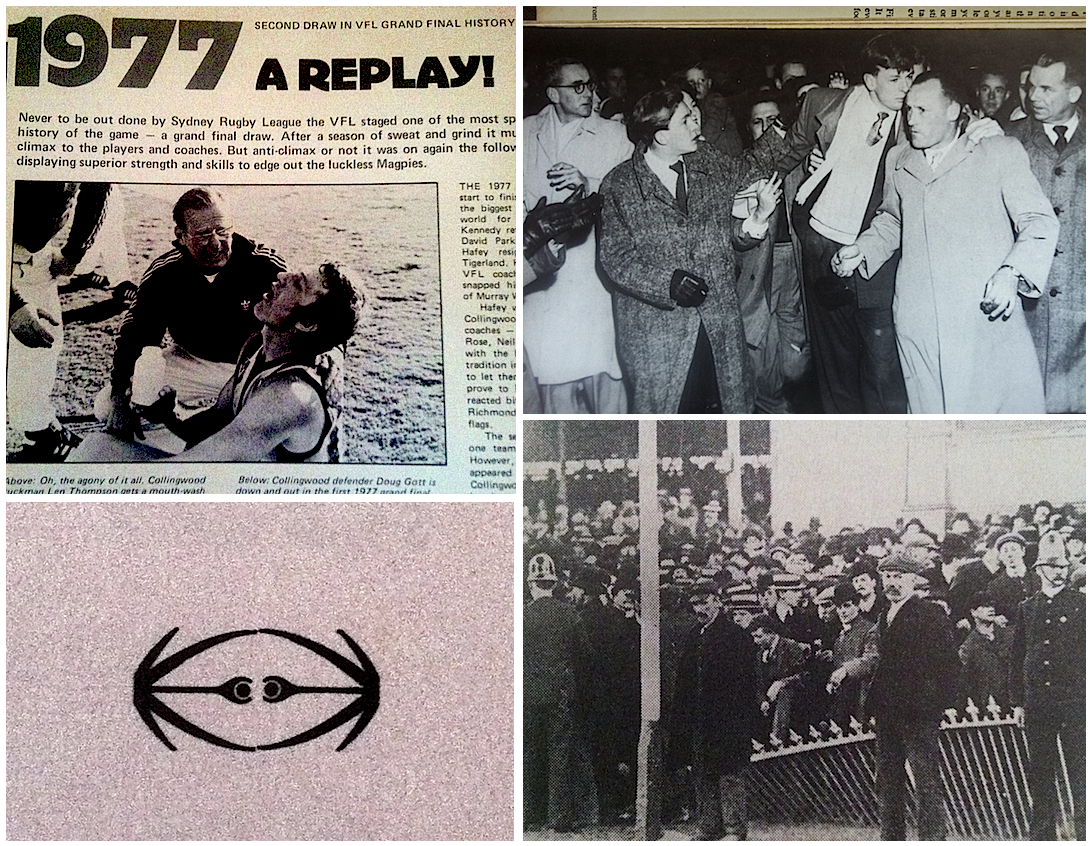
HB combined

Whenever the 1977 drawn grand final is mentioned, as it often is, the image in the top left hand corner is what comes to my mind first. The exhaustion and demoralisation is palpable, though it turns out simply to be Len Thompson receiving a 3 quarter time mouth wash, a fact I only realised as I read the caption for the first time yesterday!

To the right of that is one of the most dramatic pictures in Australian football history. Essendon champion, John Coleman, tearily walking away from the tribunal a shattered young man, a four week suspension ending his 1951 final series before it began. Geelong defeated the Bombers by 11 points come grand final day, surely Coleman would have made the difference? We’ll never know.

 Below Coleman we find the old MCG fence, unable keep the bumper 1908 grand final crowd of 50,261 at bay. However it has lived to tell the tale. Between the two 50 metre arcs on the southern wing of the MCG, the very same 1884 boundary fence, with some slight modifications, still stands, making it clearly the oldest part of the MCG, not so closely followed by the 1985 fly-swat light towers.
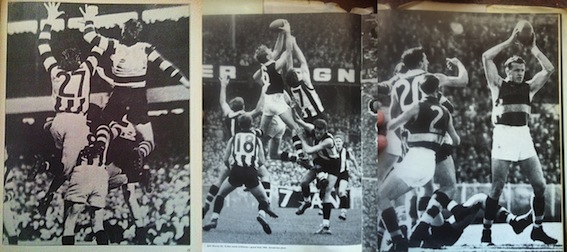
HB Grabs bookThe photo on the left shows action from the Geelong v Collingwood grand final in 1937 in pretty much the same position that the 1907 Carlton v South photo was taken (above). The Southern stand was brand spanking new in 1937, and as you look through these books, the action suddenly becomes recognisable with the arrival of the grand stand, suddenly looking ‘modern’ compared with the treed MCG, the knickerbockers and numberless jumpers.

To the right of that photo sees St.Kilda’s Bob Murray, taking what I see as the most graceful of marks in the 1966 grand final, while further right we see EJ the showman in the 1961 semi final against the Saints, triumphantly holding the ball aloft, giving the appearance that he’d just performed quite a feat to secure it.

Finally, as the books were published mid 1970’s, the arrival of glossy coloured images filtered their way into the production. The book on Grand Finals comes complete with an ‘Action Packed 70’s’ colour section, wedged in between the years 1945 and 1946, akin to a Cleo sealed section. Again we see the characterful old Southern Stand, packed to the hilt, as Carlton and Richmond battled it out for the 1972 premiership.
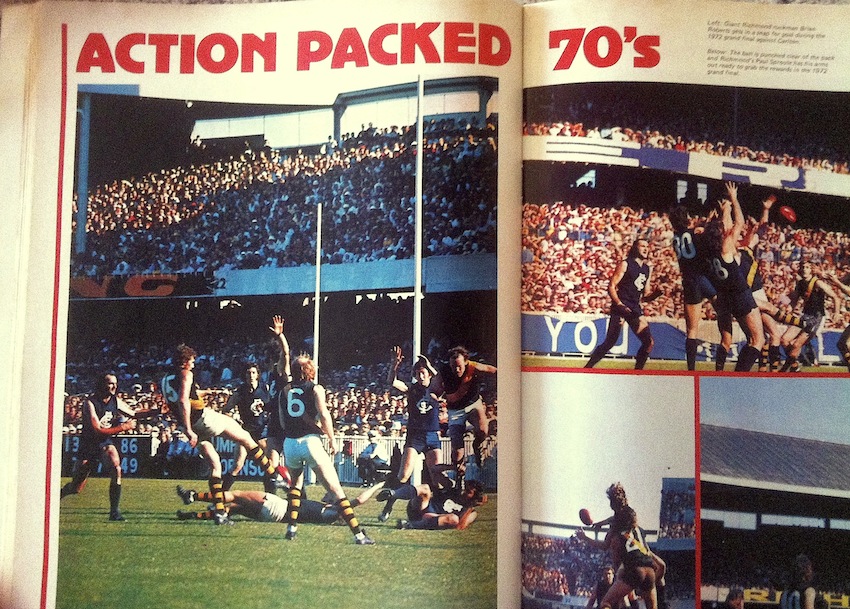
HB70'w
I hope you’ve enjoyed my trip down memory lane. You may even recall these books, or have more recent copies which were reprinted in later decades. While the old days of footy are at times difficult to connect with the game we know today, it’s good to know where footy has come from, that during the 1920’s, the 50’s or the 70’s, the game was always seen as we see it today, quicker and more skilled. We may look back on today’s football in 100 years with a nostalgic glance to a funny looking game they used to play on real grass! Who knows?HB Dad's writing
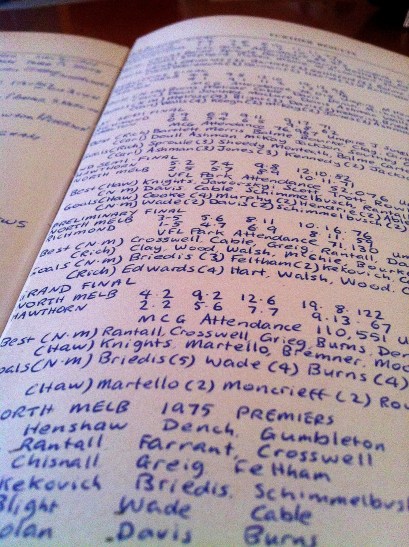
The Courage book of VFL Finals may have come to a halt in 1973, but my father, in his early 20’s, utilised the several ‘Further Results’ pages at books rear, maintaining detailed finals results up until 1976, along with a cameo appearance from the 1980 grand final.
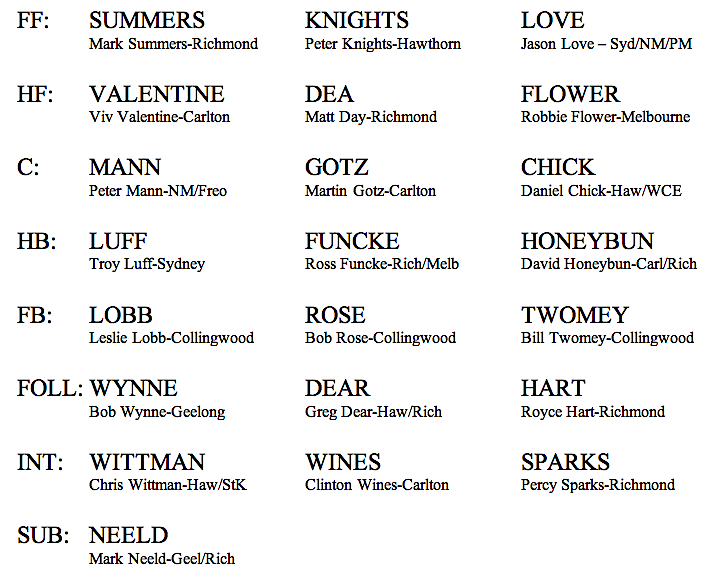
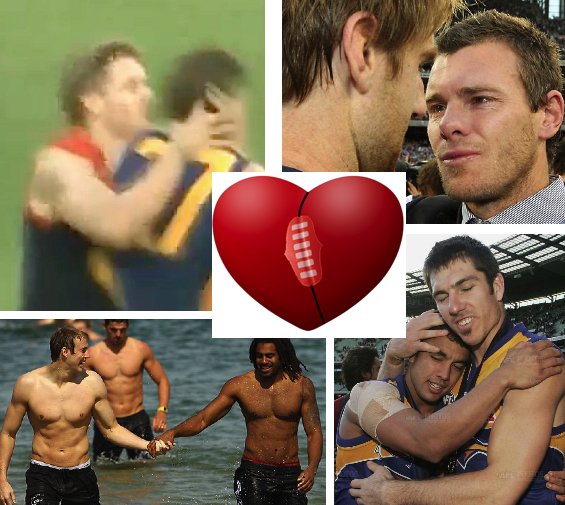
Valentines Day themed team sheet

I’ve loved themed team-sheets since my dad, a lover of playing around with the English language, ran me through his favourite line of:

LOVE – FREE – BEERS

Even recently I’ve been amused by fellow Nick Maxwell blogger, Recovery Session panellist and mate Nath’s centre line of…

TRIANIDES – GARLICK – GOODES

*That reads ‘Try and eat his garlick goods’ for those wondering*

However to date on this blog I’ve shied away from the themed team-sheets as they’ve become slightly clichéd. But I took a long hard look at myself in the mirror and got off my high horse. Seeing I make the claim that this site is a  ‘wondrous world of footy sub-culture,’ it’s now become clear that without a themed team-sheet, I was living a lie.

So here it is, my VALENTINES DAY Themed Team-Sheet

final VALENTINE team

Some explanations…

-Wynne, Dear, Hart…should you win the heart of the one you love.

-Wittman, Wines, Sparks…Wittman being Chocolates, Wines, and the sparks should fly!

-Neeld-Many a man has gotten on one knee on Valentines Day.

Please don’t hesitate to ask for further clarification, or add your own Valentines Day inspired teams or lines in the comments section.

Happy Valentines Day…

                                                                                                          Love, The Holy Boot

UPDATE: Some fantastic entries from my twitter followers…

@FightingTiger12 added Terry Keays, Luke Toia, David Hart – KEAYS TOIA HART

@nathcroughan added Jason Wild (whom he loves) Love and Knights – WILD LOVE KNIGHTS.

Keep ’em coming…

Football Love in

Premiership Glory

Without shadow of a doubt, the highlight of my primary schooling years was Friday afternoon inter-school sport, particularly footy come the winter months. It was a pure joy to make it past the spelling test and the Speedy Gonzalis maths ‘race’ a Friday morning would offer up, and then jump on a bus or wait the arrival of our opponents from various parts of Blackburn and it’s surrounds.

I liked wearing my shorts underneath my trackies so I could be changed and ready as soon as possible, ready for action. Of course we’d hand the teacher our oranges the morning of a home game, and they’d magically reappear, quartered, at half time of our match.

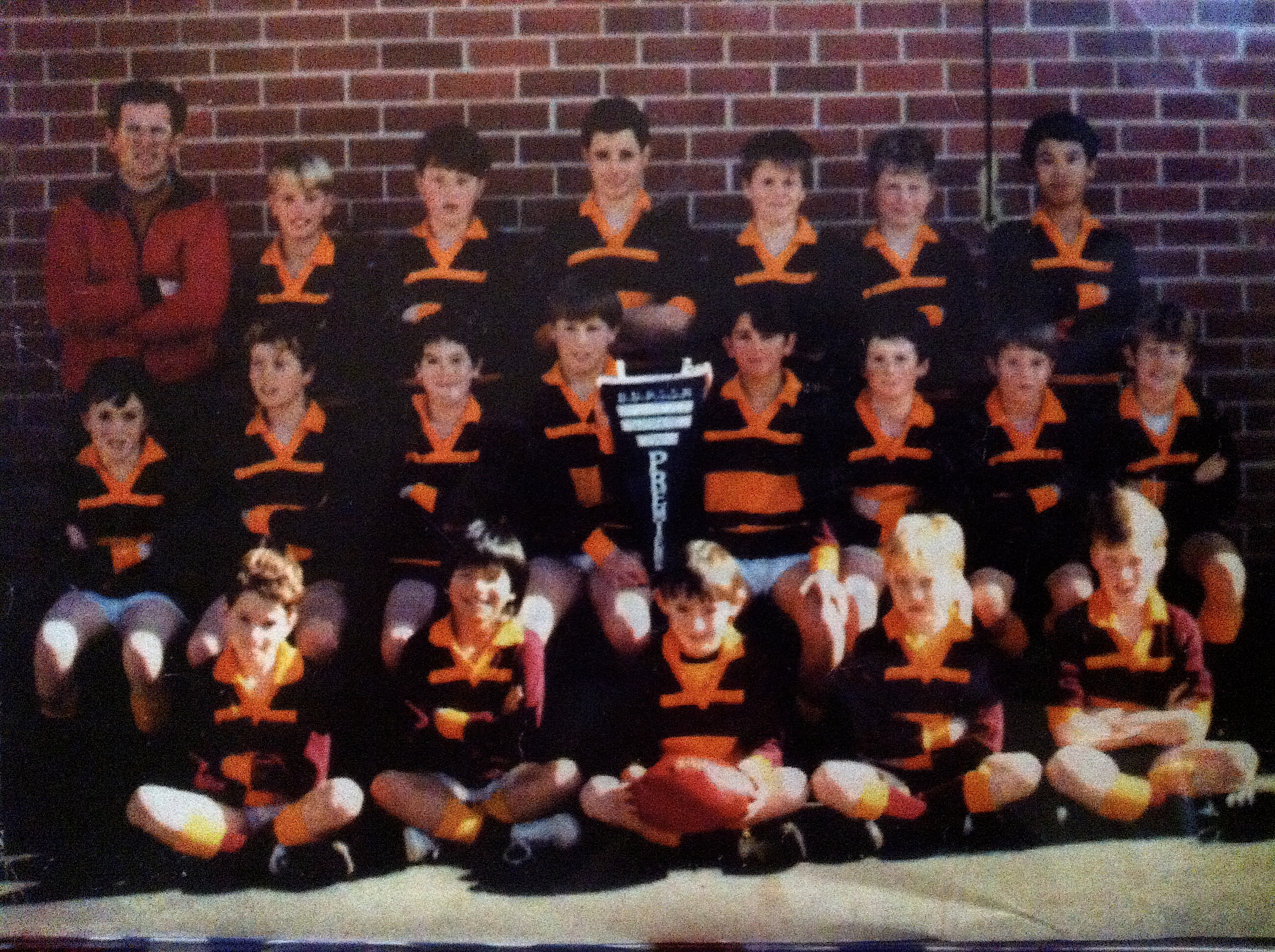
The year 1991 was a big year for my football career. In fact, it was clearly the peak. Not only did I play my first and only game for Richmond, (Little League) but I was one of 3 grade 4 kids who got to play with the 5’s and 6’s. Remember, this was primary school. The grade 6 footballers were like Dermie or Timmy Watson to us in lowly grade 4.

blacky 1991

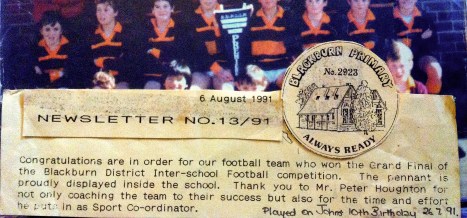
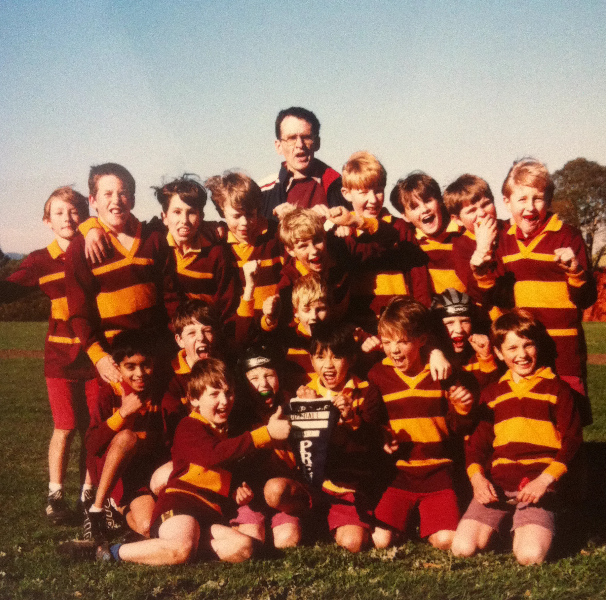
To be truthful, I remember very little of the footy played that year, other than the fact we made the grand final, and pipped arch-rivals Blackburn Lake (dirty bastards!!) in the grand final at the stately Kingwsood College. Premiership success! And played on my 10th birthday no less. The photo above was taken back at school the following week, and due to being the baby of the team, was plonked front and centre and given the ball to hold.

Black news

Daniel, the blonde kid next to our competitive coach, would years later provide me with one of my fondest footballing memories. Blacky primary kids generally went to either Blackburn High or Mallauna College, making interschool matches between these schools rather interesting! In a tight and fiery match, Daniel, playing against ‘us’ for Mallauna, gave away a double 50 metre penalty at the death, gift-wrapping us Blackburnians the match winning goal. Funny stuff. But I digress…
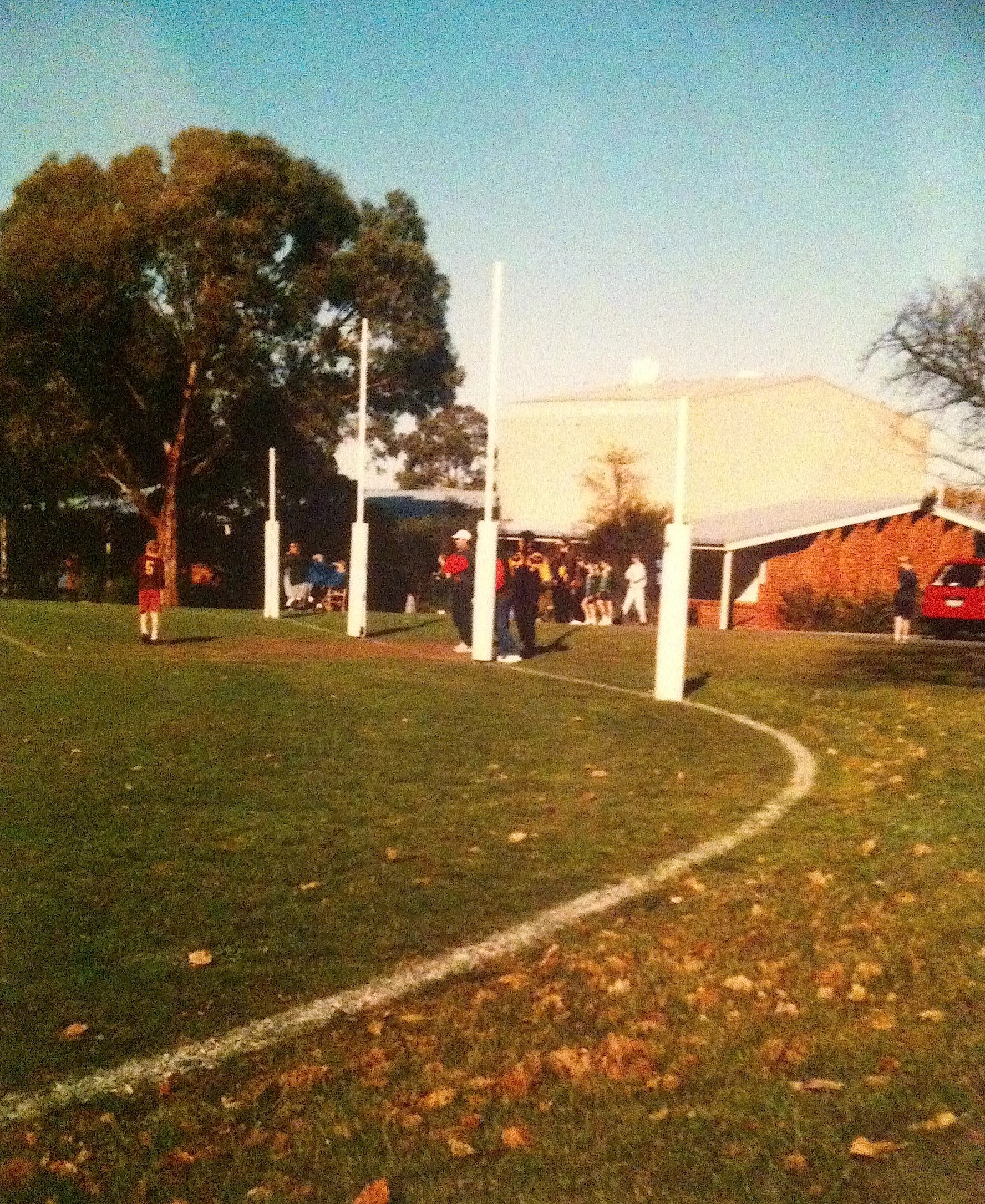
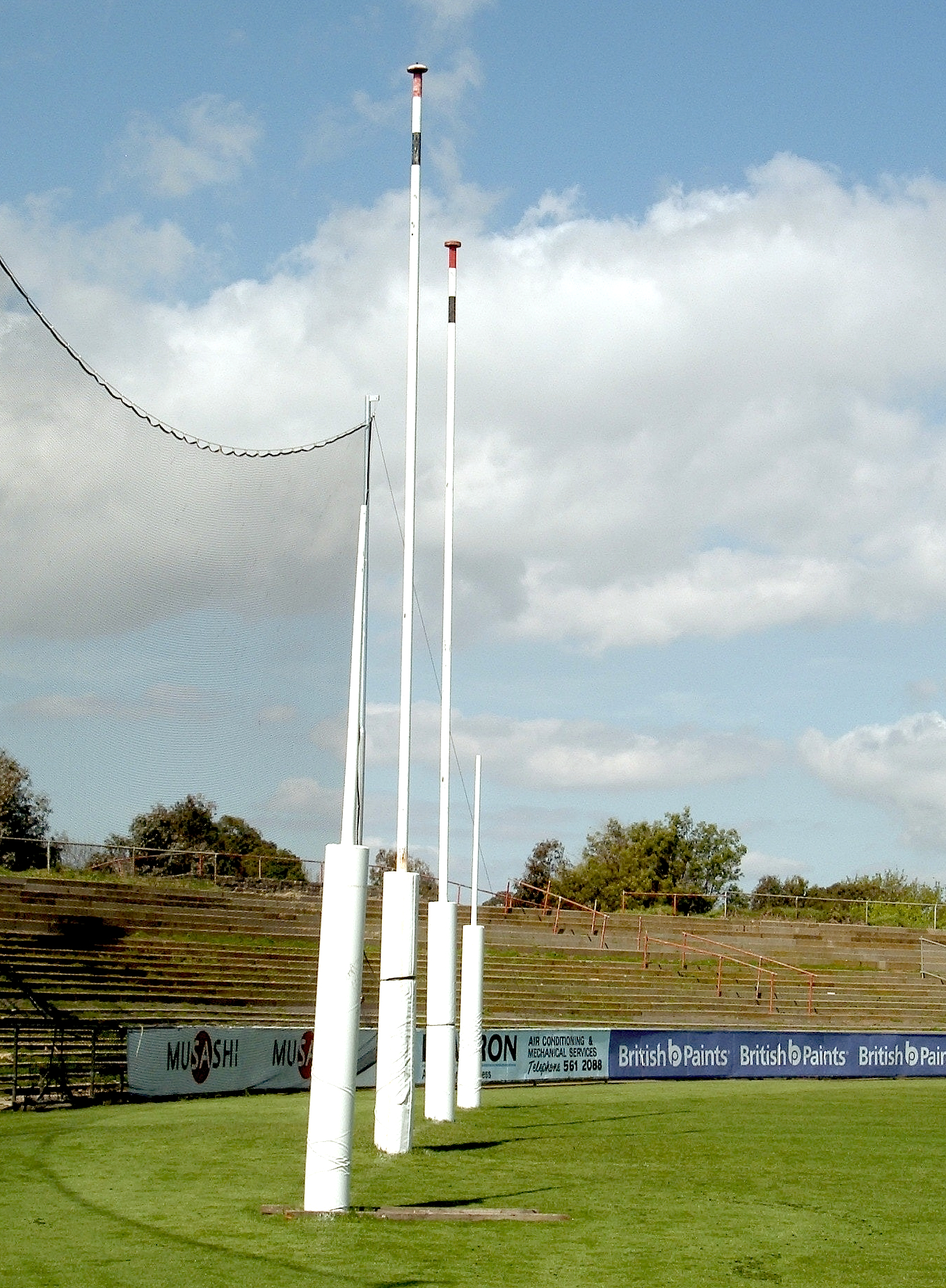
Playing at Kingwsood College was a treat. As you can see in the photo below, they had boundary lines! Not just that, thick, obvious ones. At Blackburn we had to run out witches hats before a match. And look at those padded goal posts! Ours were big hunks of tree wedged into the rock hard and at times gravelly surface. It seemed a fitting grand final venue.blacky kingswoodThe following year, 1992, saw the team struggle, and by the time I was in grade 6, 1993, the basketball phenomenon had depleted our football side. Our coach (coach first, teacher second I think) even tried to prevent the ‘footy players’ from playing basketball, although I can’t remember if he succeeded. We went winless, even scoreless on one occasion against St.Tom’s. The glory years (2 years is a long time when you’re in primary school) seemed a distant memory.Blacky trudging

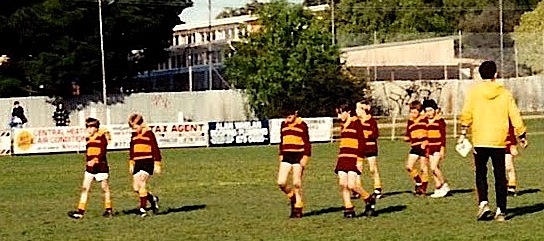
Trudging off Morton Park in 1993, I’m 4th from the left.

But a new generation came along. Six years my junior, my brother, Pete, would too taste premiership glory for the maroon and gold in 1998. What’s more, it was also against the dreaded green and red of Blackburn Lake. Kingswood College was again the grand final venue, and though the Lakers had one of those kids who’s matured early, (he looked about 15!) the Burners came out victors in another tight tussle.

Blacky 1998 flag

My brother Pete is the cheeky looking doofus down the front with his thumb up. Note that he’s wearing my Richmond footy shorts (he follows Footscray), which is refreshing as the rest of the team appears to be wearing their school shorts. That never would have happened in my day!

Someone also must have had a word to our coach Peter Houghton about the nature of primary school footy, because it became more inclusive when my brother was under his tutelage. This was unfortunate because Pete was switched to full back at half time of one match after kicking 5 goals in the opening half! He’s still bitter, just ask him!
Blacky v Lake

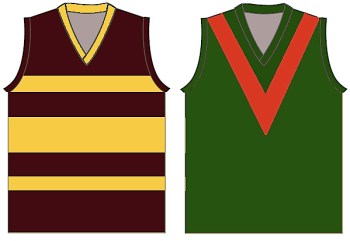
Blackburn on the left, Blackburn Lake on the right.

Primary school footy, how I loved you. I’ll leave on this note. How good are these jumpers? No sign of a clash, simple, bold designs. Free of cartoons, images, thunder bolts or ‘experimental’ colours. Refreshing, don’t you think?

You can follow my brother Pete on twitter @carr_pete. Ask him about his 5-goal half!!

Photos taken by mum and myself.

Bendy Crowd Statistics

People just love to go to the footy, support their team, vent their spleen, and become one with the action on the field for a couple of hours a week, much like WEG’s depiction below. And attendances at AFL matches are at an all time high. Though the figure dipped slightly the past two years with new franchises the Suns and Giants, this was to be expected. Add to that the large sections of redevelopment occurring at the SCG and Kardinia Park, and the dip in attendances is merely a blip on the radar.

In the year 1980, with football yet to go national, the total attendance figure for VFL home and away matches was 3,280,129. From 2005 to 2012, it hasn’t been below 6 million, meaning in effect, league attendances have doubled with the introduction of the national competition. Case closed, Australian Football goes from strength to strength, and they all lived happily ever after. The end.

…Oh, you’re still reading? Well perhaps that’s not exactly right. There are a few questions now you mention it. Is the AFL (that’s the Australian Football League, not a reference to the sport; Australian Football) more popular than it’s ever been as the attendance figures suggest? Is the AFL an ever expanding juggernaut which will never stop? And just how accurate are these figures? Can they be bent to appear more impressive than they actually are?

Let’s look at some obvious differences between the years 1980 and 2012, and how they may have impacted the attendances.

WEG Footy crowd

-In 1980, games were played simultaneously on Saturday afternoon at two o’clock. If you wanted a second footy fix in 1980 then it was to the VFA on a Sunday! Come 2012 and it is rare to have any matches played at the same time, with Friday night, Saturday arvo, Saturday twilight, Saturday night, Sunday early, Sunday arvo and Sunday twilight filling each round. The point? You can attend 2, 3 or even 4 matches a week if you’re particularly keen.

-Round 1,1980. The previous years grand finalists, Collingwood and Carlton, were matched in a blockbuster fixture. However only 29,593 could cram into Victoria Park. The return match saw 43,903 shoehorned into Carlton, giving the fierce rivals an aggregate of attendance of 73,596 for the year. Fast-forward to 2012 and the two clubs boasted crowds of 84,259 and 75,890. The moral? In 1980, Collingwood, Carlton and Essendon played at suburban grounds, severely limiting their attendance figures. In 2012, more people can go. Simple. Crowd figures are becoming bendier!

Now we get serious…or silly, I’m not quite sure. There’s no doubting that footy now has a presence in rugby league strongholds NSW and Queensland that could only be dreamed of in 1980. Weekly footy, multiple premierships to Brisbane and Sydney with state of the art stadia. But what about the traditional footy states-Victoria, South Australia, Western Australia and Tasmania? Sure, attendances in the Apple Isle have risen 100% since 1980, but that’s yet another bendy stat.

SANFL WAFL VFL

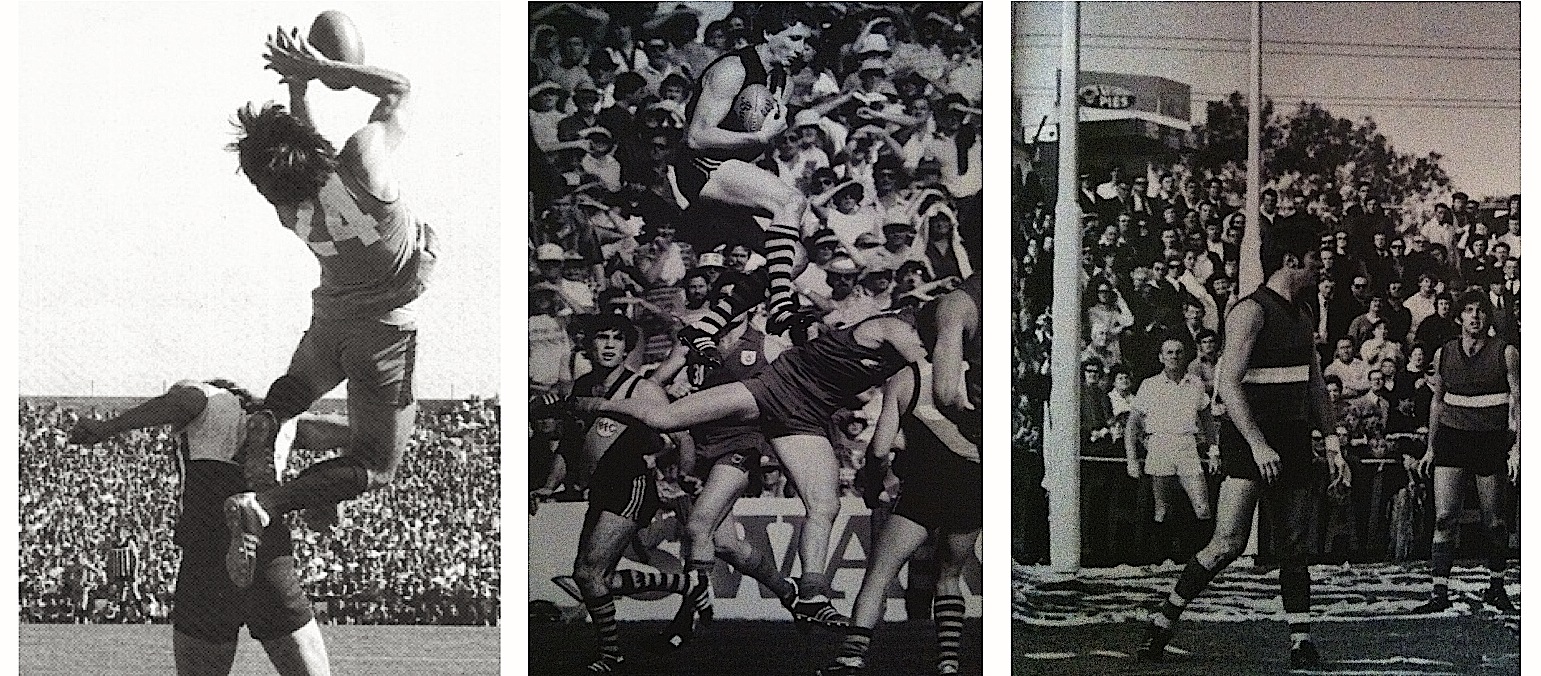
Top level footy in the SANFL, WAFL and VFL brought plenty of people through the gates! Left to right, Sturt’s Rick Davies, Claremont’s Warren Ralph, and Footscray fans, I might need your help with these two!

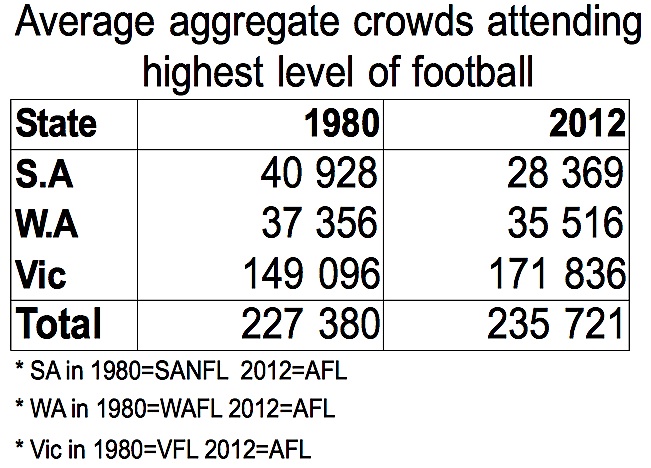
In 1980, the top level of footy you could watch in South Australia and Perth respectively were the SANFL and the WAFL. In Victoria of course it was the VFL, precursor to the AFL. The average attendance figure for a weekend of SANFL matches in 1980 was 40,928. The WAFL, 37, 356 and the VFL 149,096. Combined, the three states on average attracted 227,380 per week.

Fast forward to 2012, and South Australia’s average weekly AFL attendance is 28,369. In Western Australia it is 35,516. Only Victoria has seen an increase to the weekly attendance of top flight footy, now averaging 171,836 patrons.

Interestingly, the weekly average attendance in 1980 for the three states combined, 227,380, has risen only slightly in 2012 to 235,721 patrons weekly. The table below will hopefully shed some more light! Suffice to say, perhaps the current figures aren’t as healthy and as amazing as they seem.

Agg VFL SANFL WAFL

But let’s take things up a notch and get a little crazy! In 1980, Perth’s population was 898,000. With 37,456 on average attending the WAFL weekly, this meant that 4.17% of Perth’s population was heading to the footy. Perth now has 1,832,114 people, meaning that with an average of 35,516 attending AFL matches weekly, just 1.93% of Perth residents attend top level footy weekly.

Adelaide’s population in 1980 was 943,000, meaning that 4.34% of Adeladians went to the footy of a weekend. With the population now sitting at 1,262,940, just 2.24% of Adelaide’s population attends the AFL weekly. Finally Victoria. 1980 population was 2,806,000, and 5.31% of the population would attend the top level footy on a weekend. In 2011 it sits at 4.12%, still a large number, yet still a lower percentage.

So the three strongest footy states in Australia combined saw 4.8% of their combined population going to the footy in 1980, and just 3.24 in 2012? Where’s the growth? What happened to the record attendances the AFL often beat their chests about?

VFL WAFL SANFL tables

For some longer term perspective, 1965, a momentous year for Australian Football, saw just 2,458,697 through the gates in Victoria for home and away matches. But with just 18 rounds played, it still saw 141,594 Melbournians attend the VFL weekly, and with the population sitting at 2,068,000, this meatn that nearly 7% of the population were at the footy on a Saturday! (6.84%).

Even further back to 1924, a year before the VFL’s expansion from 9 to 12 teams, and the VFL, with just 4 games a weekend, still averaged 81,974 patrons each round. The population of 800,000 meant that a whopping 10.24% of Melbournians attended the VFL weekly, a most remarkable figure. I’d go back further except that reliable records have not been kept prior to 1921.

Ok, so I’m going way over the top and am now bending stats to say just what I want, but that’s the point of this piece, to show that figures can be manipulated to say what you need them to say. The AFL themselves have said on numerous occasions that they fixture games to maximise attendances, and I’m not saying this is a bad thing (unless it compromises a fair fixture.) But it should be taken into consideration when we hear that the game is more popular than ever due to record attendances.

(The author does still acknowledge that AFL crowds are somewhat a phenomenon when compared world wide)

With a little help from my friends – Image of Rick Davies from bigfooty, while images of Claremont and Footscray games from ‘The Australian Game of Football-since 1858’

And as per usual, thanks to http://www.aflstats.tk for your comprehensive VFL/AFL stats!

Farewell to Footy Park

FOOTY PARK WAVERLEYc/o Football Invective-Commentary with Balls

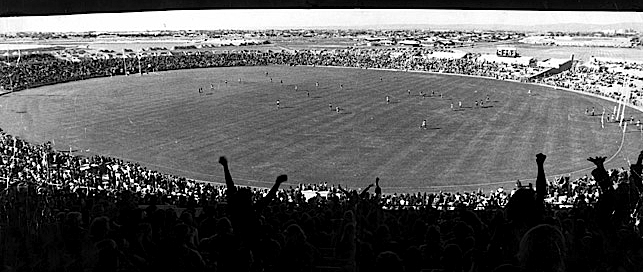
West Lakes and Waverley. Football and VFL Park respectively. They are 100’s of kilometers apart, yet the two are so close in many ways. They’ve even been referred to as ‘sister’ stadia. While VFL Park is long gone as a league venue, the last match for premiership points played in a previous millennia, upon entry into 2013, Football Park is too on the cusp of sharing the same fate. Next year, Footy Park will become a former league venue.

Footy Park farewell

Image courtesy of Adelaide Now

Both grounds were built by respective football leagues, the VFL and the SANFL, looking to break away from their respective ‘home’ bases, the MCG and the Adelaide Oval, which were both controlled by local cricketing authoriteis. Waverley opened in 1970, West Lakes 1974. The move for the SANFL was described as the “most exciting and momentous since the SANFL was formed almost a century earlier.”

Both grounds were built ‘out of town…’ VFL Park some 23 km’s from the heart of Melbourne, and Football Park 14km’s, in the much smaller city of Adelaide. Both also began with grandiose visions, the VFL’s original plans catered for 166,000 patrons and a stadium ‘equal to any in the world.’ The capacity reached the mid 70 thousands, although 92,000 did cram in on one occasion. Similarly, Football Park was designed to cater for 80,000 patrons. It too, never got close.

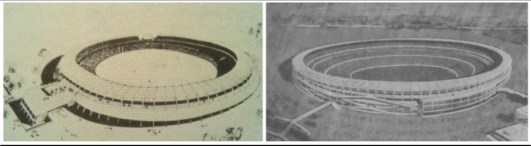
Footy Park v VFL Park comparison

Plans for Football Park on the left (80,000) and VFL Park (166,000). Looking quite similar!

The ‘sister’ stadia shared the same basic design; concrete and bench seats all the way around,  with an elevated stand opposed to ‘the outer.’ VFL Park ‘boasted’ wooden plank seats, Footy Park aluminum, a feature of many Adelaide football grounds. The plastic bucket seat has however won the day.

Unley

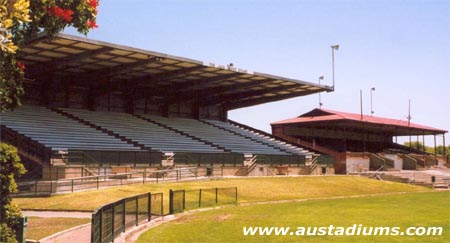
Aluminum seating-still alive an well in Adelaide! Unley Oval image from austadiums.com

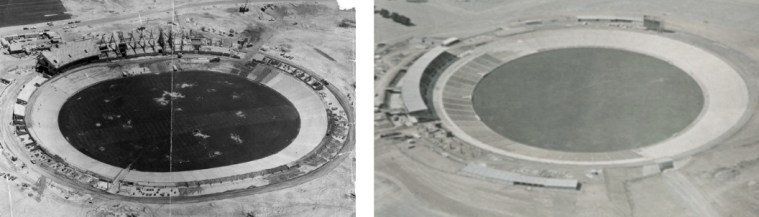
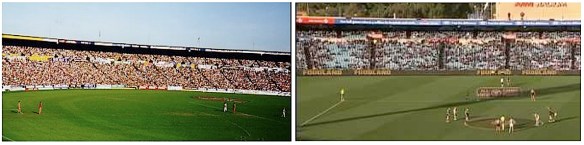
The West Lakes oval shape is less rounded and not as expansive as Waverley Park, which could comfortably host little league matches between the fence and the boundary line. Here are the two grounds under construction, can you tell which is which?

footy vfl

Image on the left courtesy of Adelaide Now

Here is what ringed (I’m referring to Football Park in a past tense I know) the outer of both grounds. Whilst Football Park is clearly smaller, both share near identical features; larger lower section, smaller ‘upper’ sheltered section with the same roofing/advertising hoardings.Footy Park comparison

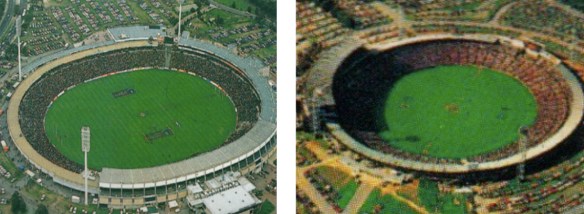
Here’s an aerial shot which gives a clear look at the similar set up of both stadia.

FPVFLPK

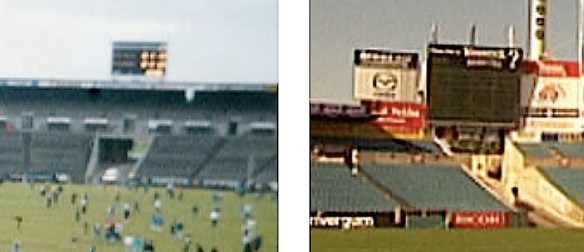
Both grounds even had a gap between their stands where a small scoreboard was situated. While VFL Park boasted the notorious ‘Big V’ scoreboard, this ‘small’ one was Football Parks main board until recently.FOOTY PARK sc

Well it’s nearly curtains for West Lakes, both it and Waverley conquered by the very cricket grounds they sought to replace. But they have played their roles admirably, and football now resides at the MCG and Adelaide Oval (as of 2014) in a more powerful position. I hope the South Australian footy people can send the old girl off in style. Ugly as she was, she had character.

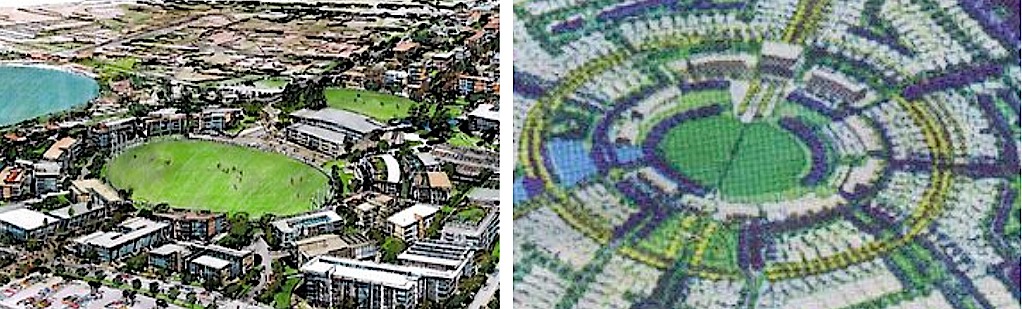
FP -The Future

And in a final twist of synchronisation, Football Park will join Waverley in becoming both a housing estate and elite AFL training venue…..together forever.  

Nice Statistic #9 The beauty of a rounded figure

Here’s a nice and even statistic to keep you going in the off-season, though not being quite the ‘blow your socks off affair’ of this little nugget! For round 21 of the 2012 AFL season, the 5 matches played in Victoria had the following crowd totals.

38,179  –  59,381  –  44,956  –  19,396  –  23,098

This gave us the beautifully round total of 185,000 on the dot, with an average crowd of 37,000 precisely! This is as rounded-off, neat and even as the Subiaco crowd figures which have been historically either a) guessed b) rounded to the nearest thousand or c) the actual number of people in attendance! I’ve always felt the answer lies somewhere between points a) and b). If you don’t know what I’m talking about, ask me. I’ll find some evidence!

Even Stevens to you all!

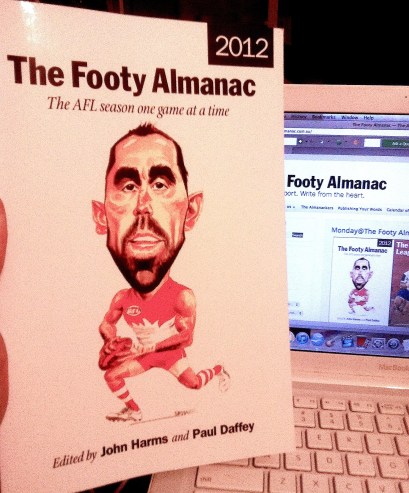
The Footy Almanac, 2013

The festive season is upon us, and whilst the organised among my loyal readers have finished buying or making presents, there are those of you like me, who are only just beginning to think about starting such a task. Well this may help, as it has helped me. If you happen to be wondering what to get for your footy-obsessed family member or friend as they suffer the withdrawals the off-season brings, look no further for the answer is here. The 2012 Footy Almanac.

So what just is the Footy Almanac I hear you ask. Great question. In essence it is a yearly summary of the AFL competition, with all match reports written by people like you and me, lovers of football. No routine newspaper style ‘match reports’ which merely appear to cut and paste the teams and players names from week to week, in the almanac each match has it’s own unique narrative. You’ll laugh, you’ll cry and all that jazz. It’s a far deeper look at the game of Australian Football.
Falmanackery

The great thing about the Almanac is that the match reports bring to life the dullest of fixtures in a way that Fox Footy’s obsession with off-season repetition cannot, because they focus not just on what happens on the ground, but also the historical implications, the pub talk, the walk to the ground, the characters in the outer. To me, it’s a more complete picture, lovingly put together by John Harms and Paul Daffey.

You can also become a member of the footy almanac website where you can share your football writing, or any other sport should you wish. Check it out, there’s some brilliant content on the site. If you’d like to order the Footy Almanac you can pick it up at good bookstores, probably some bad ones too, or you can purchase it off the almanac website.

Oh, and make sure you flick to the round 17 Richmond v North Melbourne match. Another glorious Richmond loss penned by yours truly.

Happy Snap #19 Punt Rd, Dan Minogue & some pencils

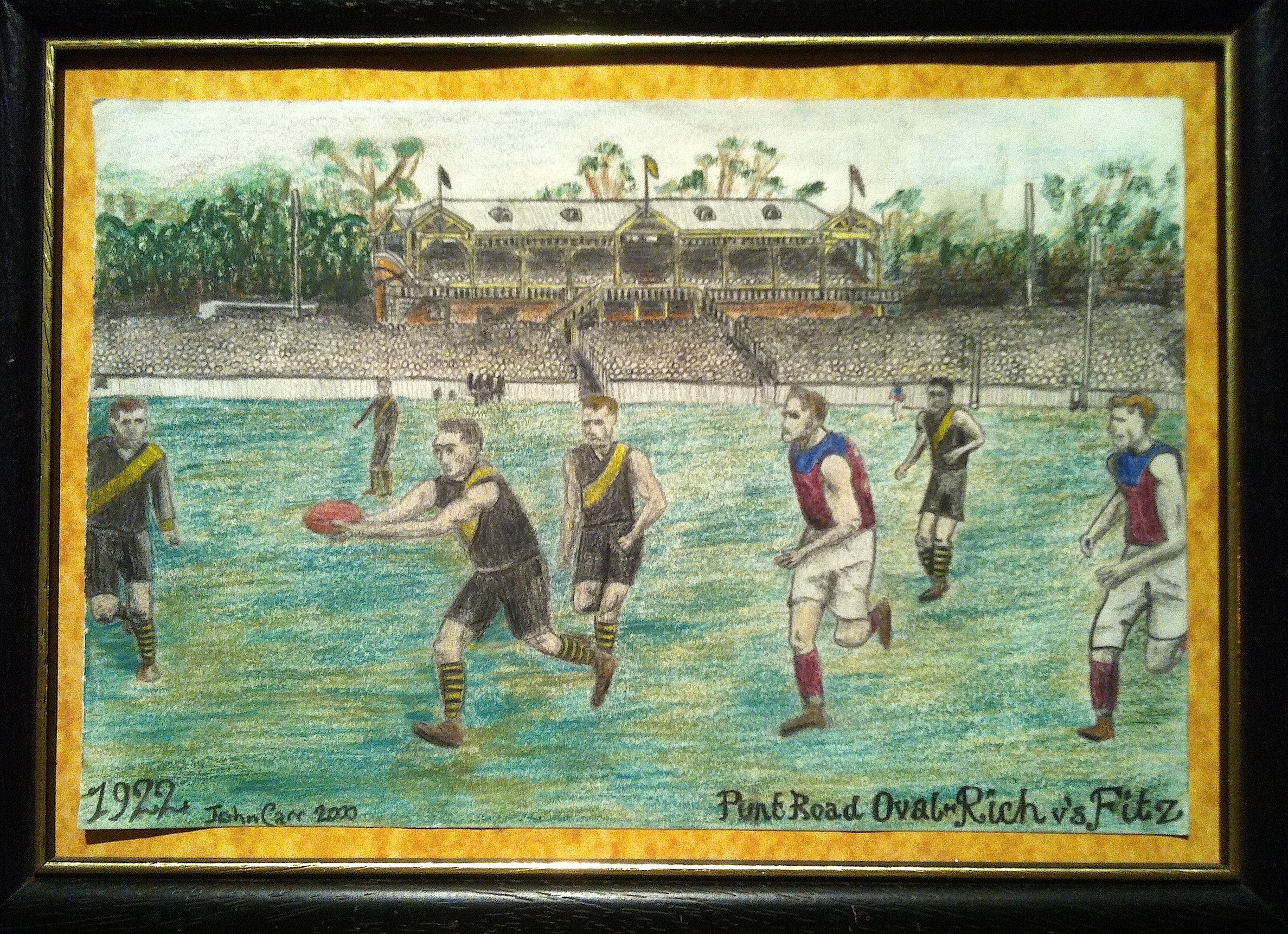
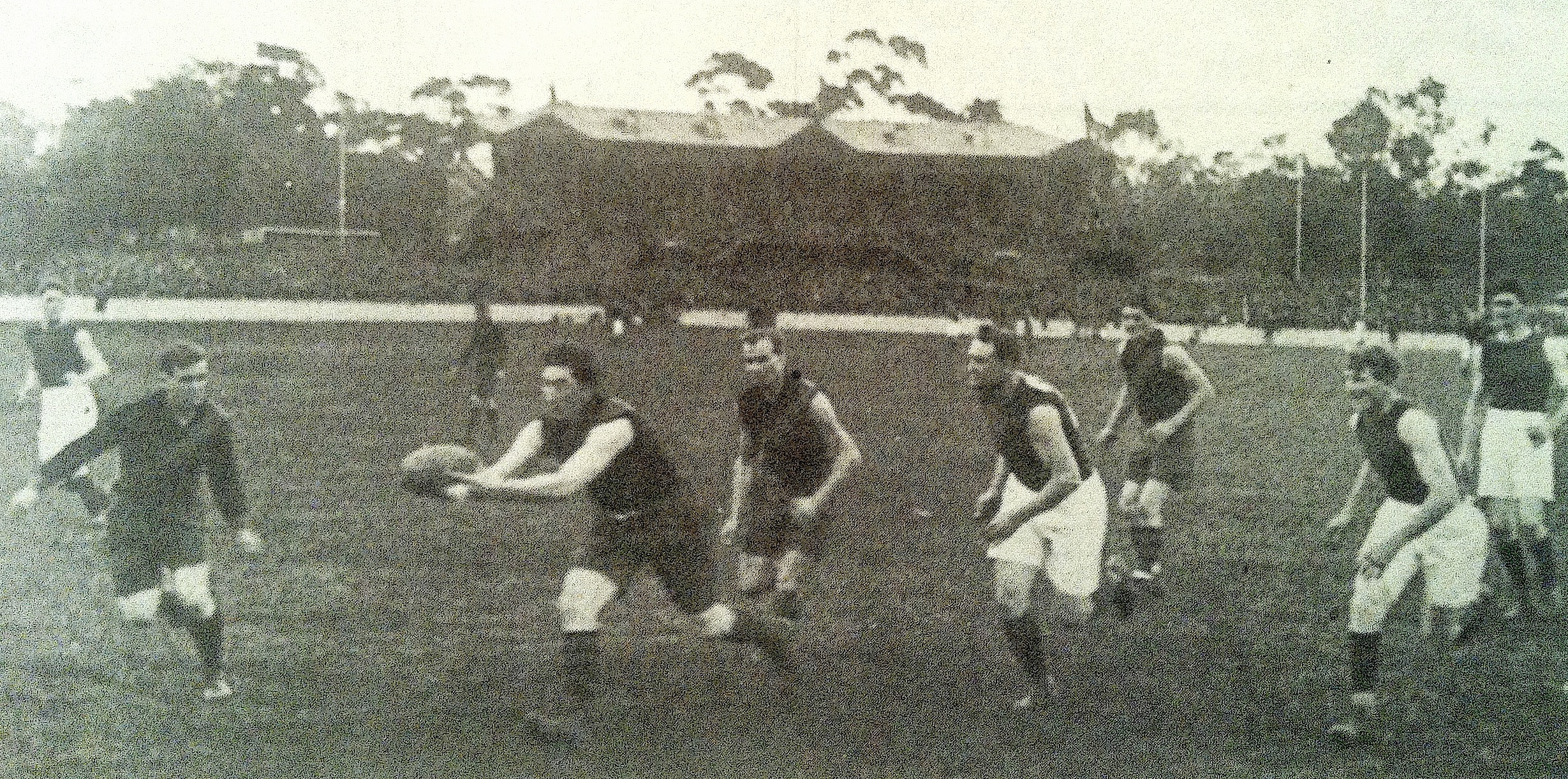
My five year old daughter the other night asked whether the olden days were in black and white. I think we may have all had that moment as children, our only links with the past being the old black and white photographs we peered at curiously. Well sifting through some old things at my parents the other day, I came across this drawing I did as a teen, and was reminded of my reasons for drawing it. I wanted to bring to life an old black and white photograph of a Richmond v Fitzroy match from 1922, with captain Dan Minogue taking a mark in outstretched arms.

Whilst I’m not particularly pleased with the ‘trees of Yarra Park’ (I clearly had lost interest by this point, a common theme with myself and drawings) I made amends, in my mind at least, with the detail on the old grandstand, when my interest in the project was clearly at a peak. Below is the original snap, photographer unknown.

The result that day was Richmond 5.10.40 to Fitzroy 3.14.32, an aggregate of 8.24! Perhaps goalkicking accuracy isn’t so bad these days. Richmond having won the previous two VFL flags, and Fitzroy claiming their 7th later this year, it was fair to say the two clubs were a big deal at the time!

Punt Road 2000's

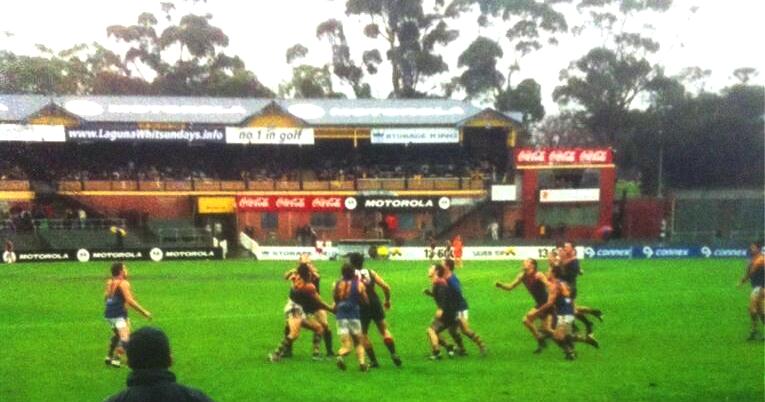
I took a photo from the same spot-Williamstown v Coburg, mid 2000's

Note: The grandstand…since renamed the Jack Dyer Stand, was opened in 1914, with a substantial addition in 1927. And Tiger fans…look out for my upcoming post on the Punt Road Oval! The more recent photo shows where the stand extenstion begins to the left.

Around the Grounds – Moorabbin

Moorabbin Oval: League venue: 1965-1992. League (VFL/AFL) matches: 254. Record Attendance: 51,370 St.Kilda v Collingwood, round 1,1965 (league debut)

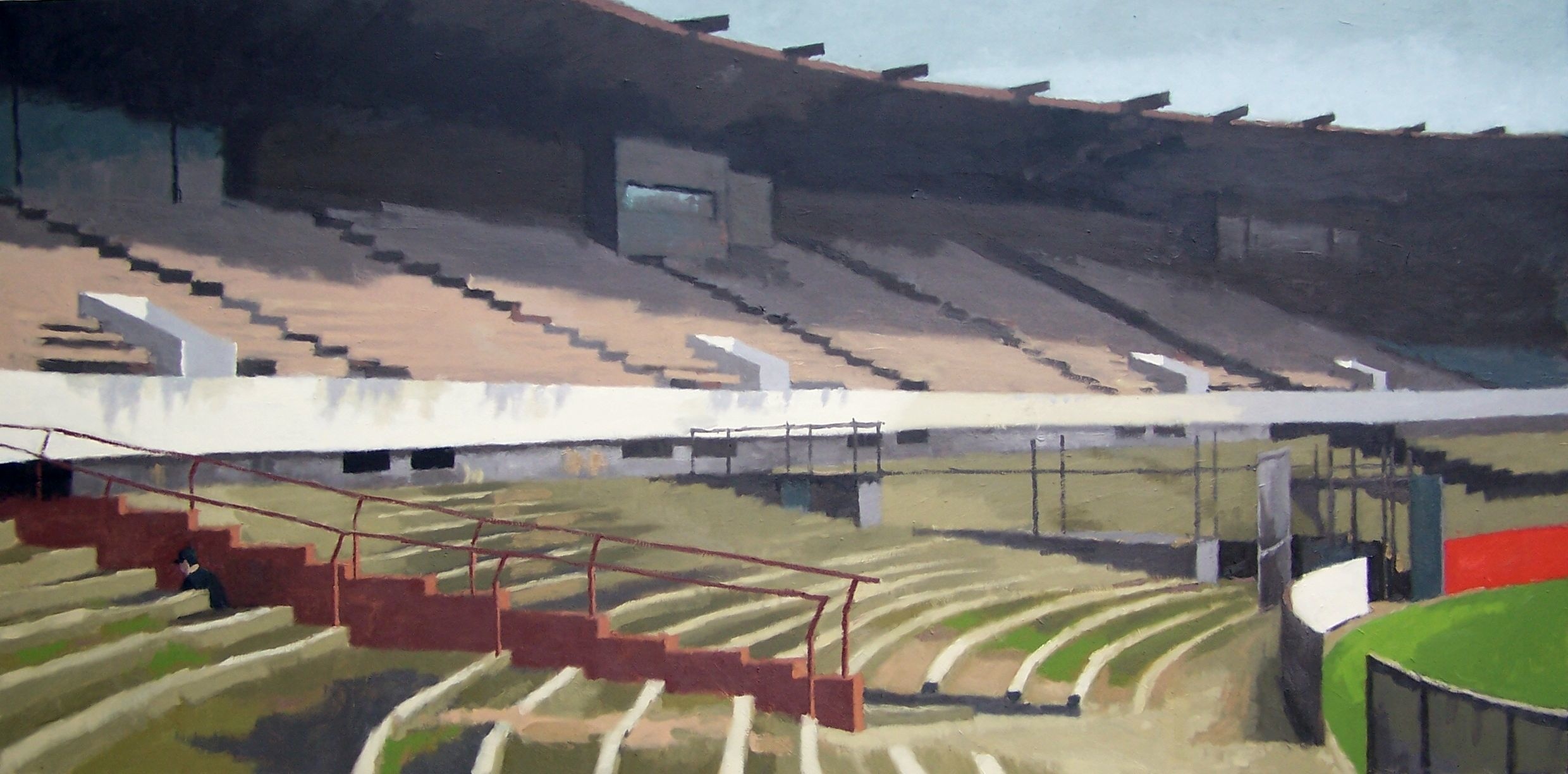
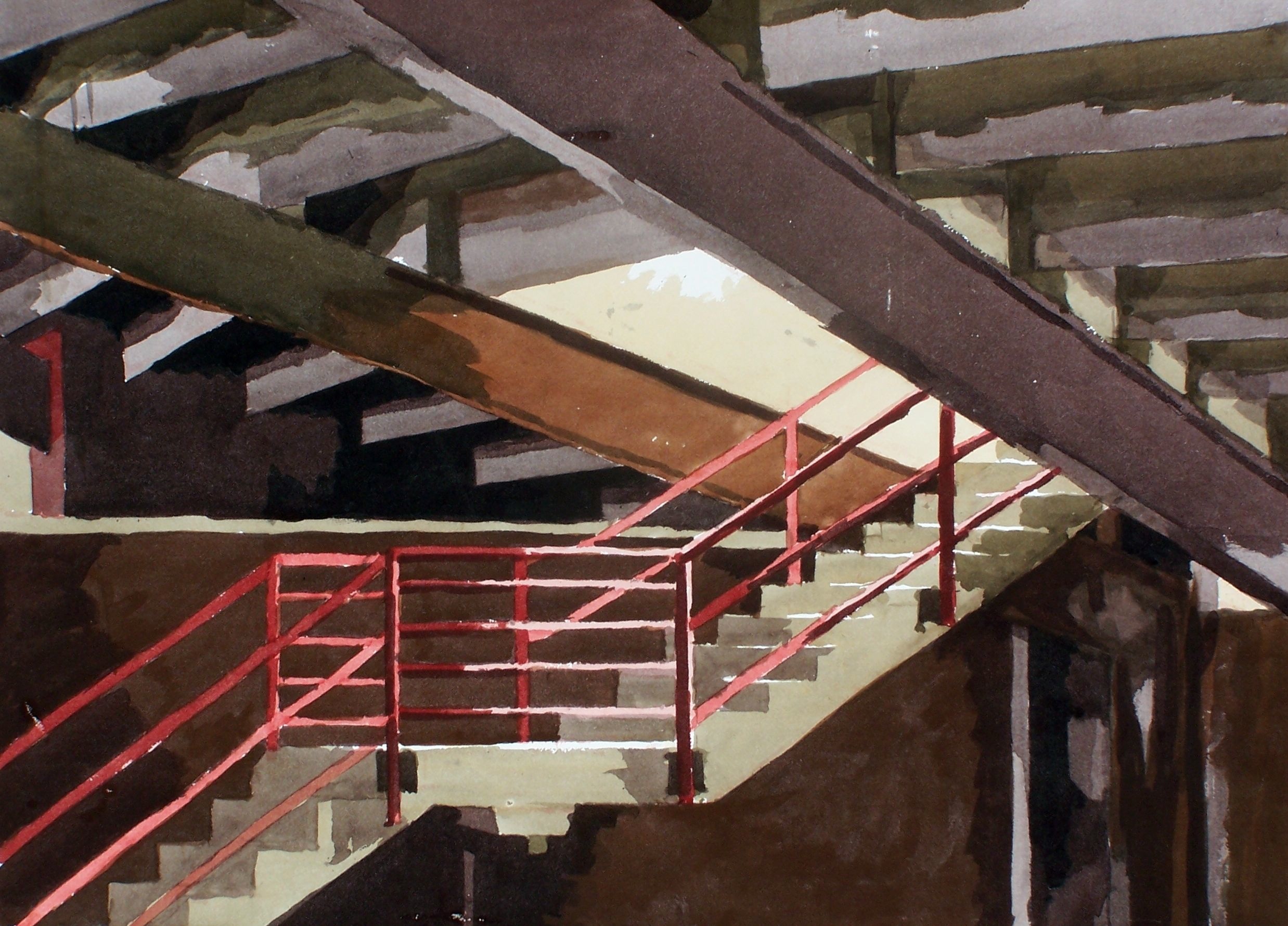
Painting of the decaying Moorabbin stands by David Hurwitz.

1965: a watershed year for the Victorian Football League. It can be argued that this year was the birth of the modern game. Barassi threw the long held ideal of loyalty into disarray, while three teams vacated their traditional homes in search of greener pastures. While North’s venture to VFA side Coburg’s ‘City Oval’ was short lived, Richmond’s move to the MCG propelled it to it’s most successful period, as did St.Kilda’s move from their home by the sea to Moorabbin, another VFA ground taken over by a league club, another glimpse into the future.

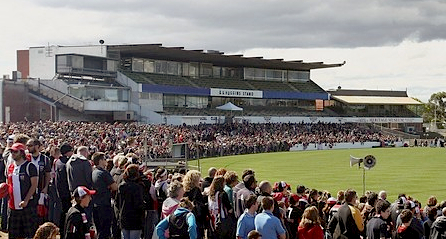
St.Kilda grand final training, 2010, photo by Jason from http://www.stkildamatchwornguernsey.com/ (Saints fans will enjoy his site!)

The Moorabbin Football Ground was previously home to VFA team the Moorabbin Kangaroos. Cutting a long story short, St.Kilda saw that the south east of Melbourne was in effect, unclaimed territory, and decided upon the shift. Though the move to Moorabbin brought with it heartache, all was quickly forgotten as St.Kilda made back-to-back-back grand finals, winning their one and only flag in 1966.

You can track St.Kilda F.C’s movement’s in the below diagram I put together.

As you can see from the recently demolished stands at Moorabbin, the intention appears to have been to gradually morph St.Kilda into the Moorabbin Football Club, but this clearly never eventuated.

Whilst the ground’s league lifespan was short, less than 30 years, it truly found a place in the heart of St.Kilda fans. Though not quite to the level which Victoria Park has entered football folklore, Moorabbin has still spawned it’s fair share of paintings and literature, holding a certain dreamtime quality for fans of the red white and black.

On the left is another painting from David Hurwitz, painted in a very similar position to which I took the photo on the right! Great minds think alike I guess.

This post isn’t about the Animal Enclosure, the old Moorabbin nightclub or the muddy centre square. Heck, it’s not even about the Jeff Fehring goal from behind the centre! (However if you want a sneaky look, here it is!)

This is a collection of pictures I took of the ground in 2006, in a desperate bid to photographically archive all the old league grounds in Melbourne. As it turns out, much of what I captured has since been demolished, and many links to the past now gone. It seems a number of footy fans shared my vision, and some of their photos and paintings have helped shape this post.

My dad always said that Moorabbin seemed odd to him as it jutted out of the south-eastern suburbs of Melbourne; most other grounds were flanked by old hotels, old train stations and old terrace houses. Moorabbin was surrounded by the cream brick veneer housing of an ever-expanding city.

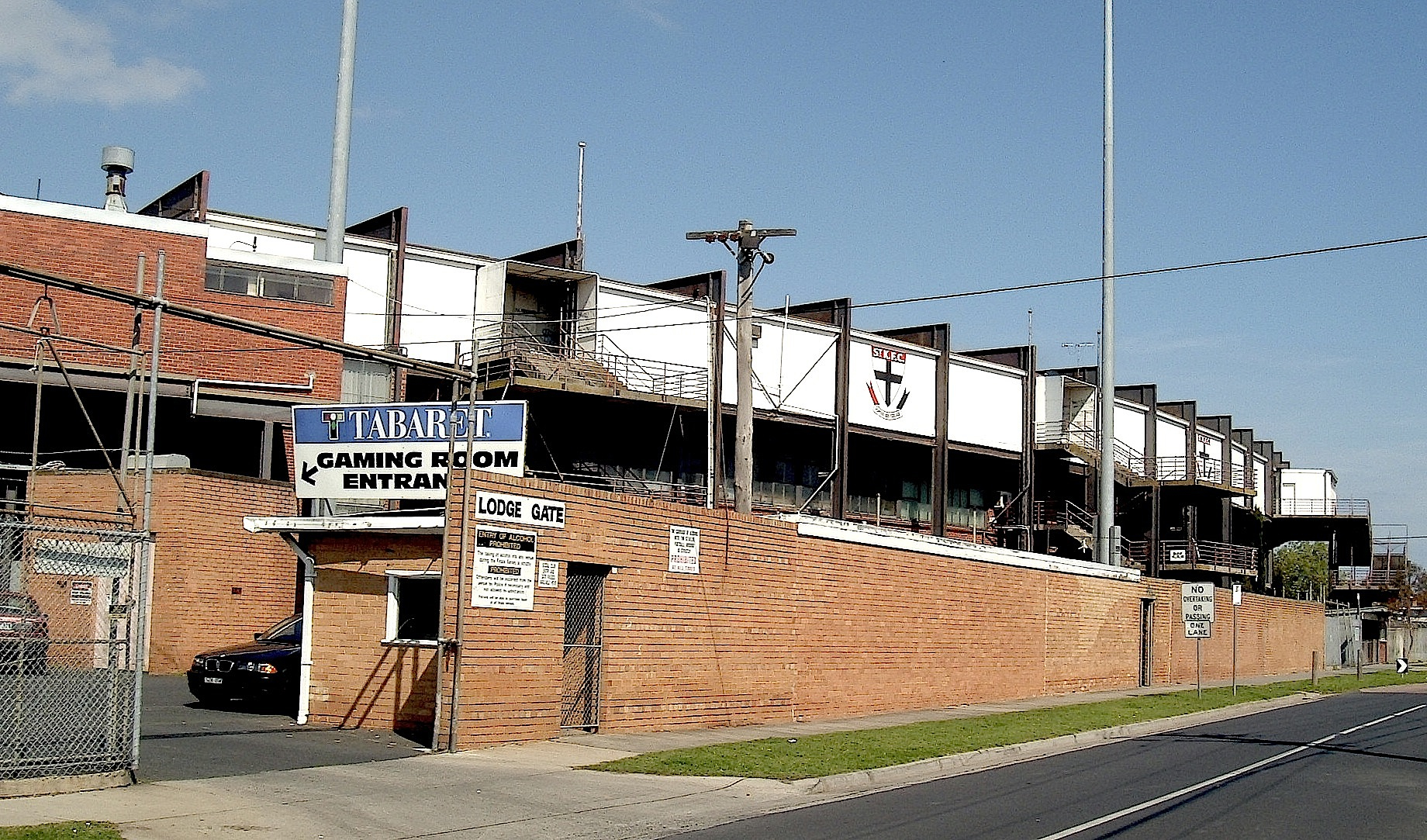
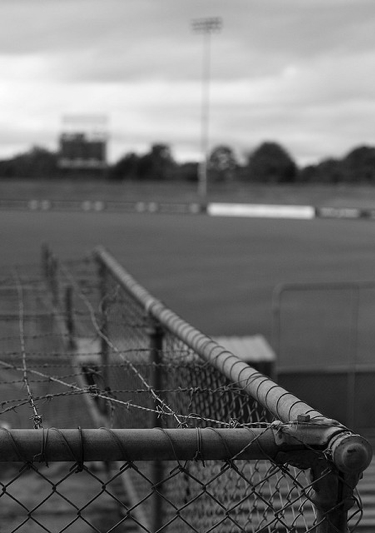
As I circled the ground before entering, I snapped one of the old entrance gates. On closer inspection, it became quite clear that it was occupied, and though I was keen to document all that I could, I decided to continue on.

And what this above photo makes me realise? That modern football stadia is severely lacking in barbed wire!

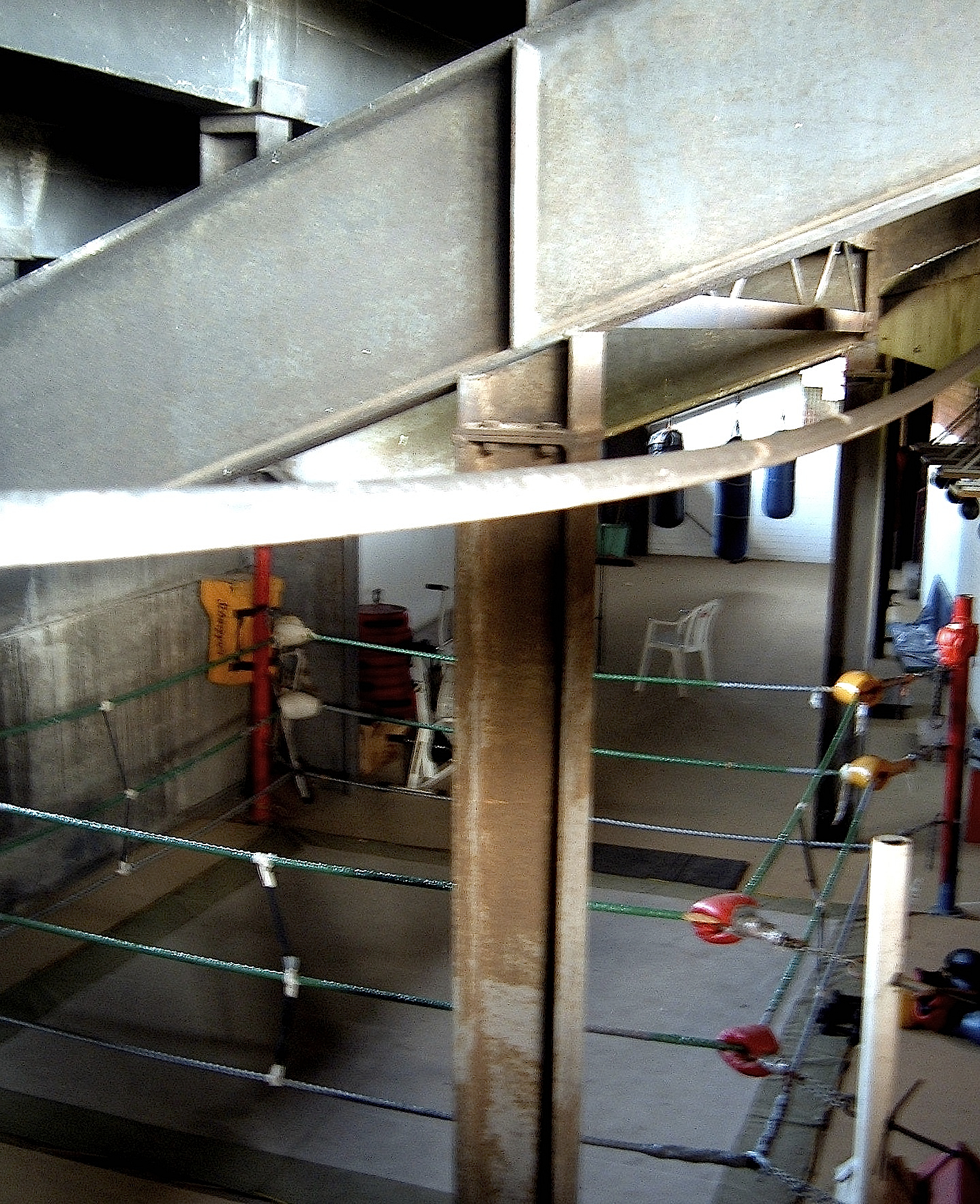
As I entered the ground from the Linton St side, I couldn’t help but catch a glimpse of St.Kilda’s gymnasium of the time. Even though this was six or so years ago, it was severely behind other clubs and their advanced setups. This was open to the elements!

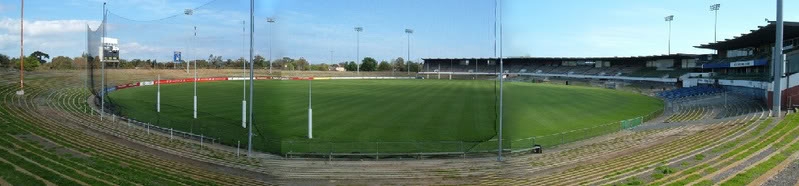
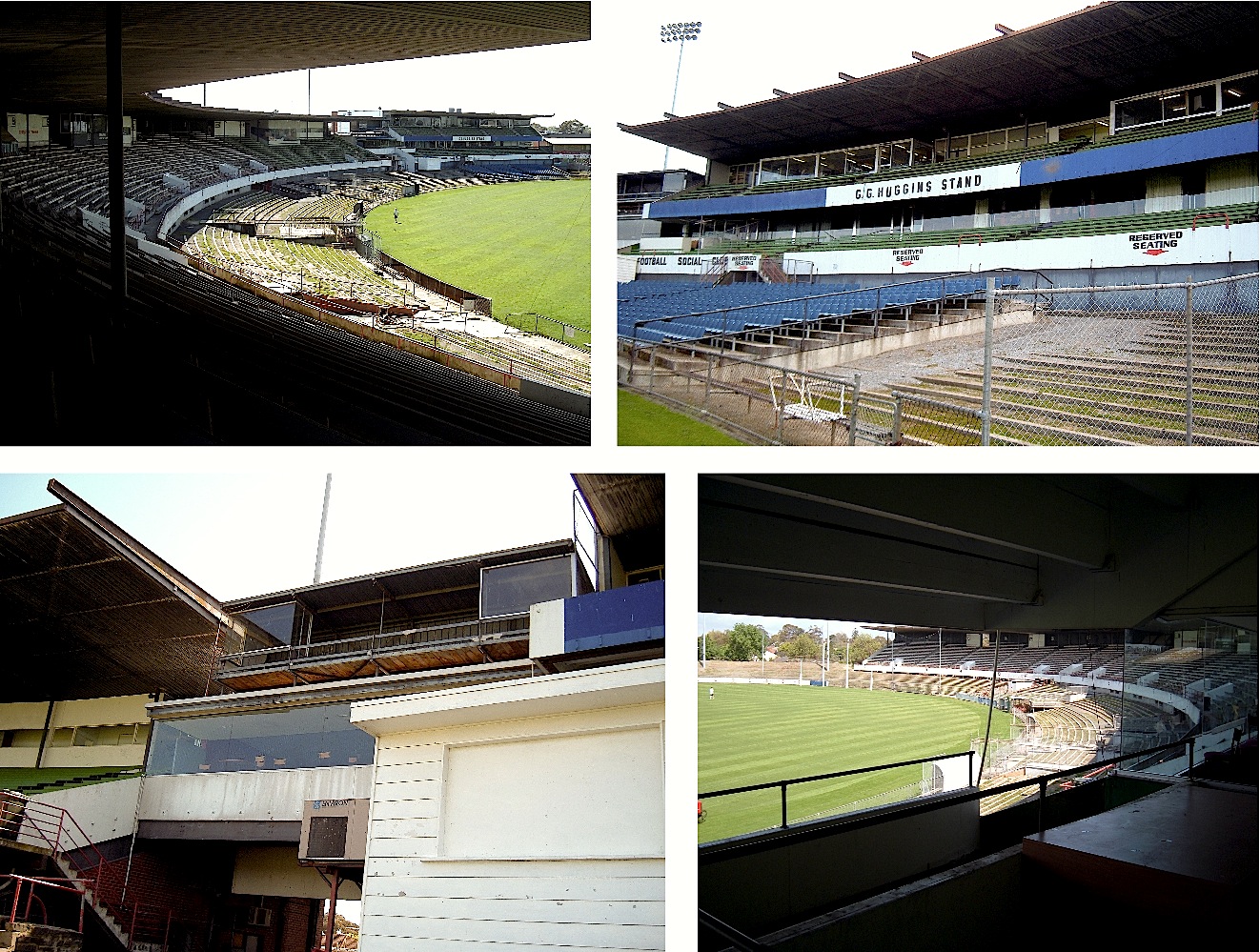
What struck me about Moorabbin was the size. The stand which stretched from the wing to behind the goals (below) was very large for a suburban ground, and the terraced outer was rather expansive. It begs the question of why the club actually moved to Waverley Park in 1993. Geelong’s Kardinia Park is nearly three quarters through a long-term redevelopment, the club reaping the benefits of being able to sell reserved-seat tickets to their matches. It is a shame that a ground such as Moorabbin has not shared the same fate.

The grandstand offered plenty of cover and very good views. However, the photo at the bottom left is what I love about the old footy grounds…if you needed a coaches box, you built it on top of the stand, creating a haphazard atmosphere which brought with it great character. A combination of weatherboard, tin, steel and brick!

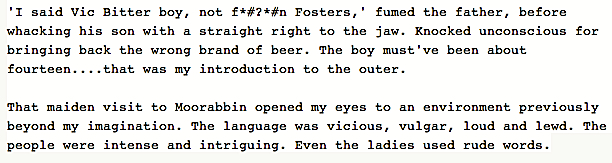
Now to the outer. This is where the majority of footy fans have watched the action for the best part of 150 years. It’s now all but a relic of the past. Moorabbin’s expansive outer bore many a story, tears of joy and despair, the odd laugh and a round of fisticuffs or two. To illustrate, here’s how St.Kilda diehard Matthew Hardy’s remembered his first experience of the outer at Moorabbin from his wonderful (and highly recommended) book ‘Saturday Afternoon Fever

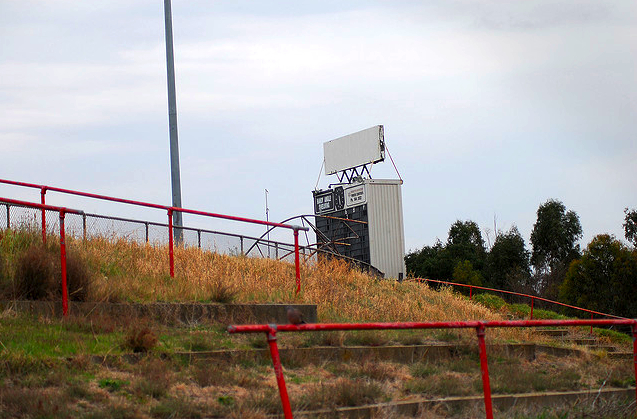
I love this shot taken by supporter and photographer Berk McGowan of the overgrown mound behind the outer, the scoreboard still erect and the iconic red iron work. It really captures both present and past. (Check out www.berkmcgowanphotography.com)

photo supplied by Berk McGowan Photography

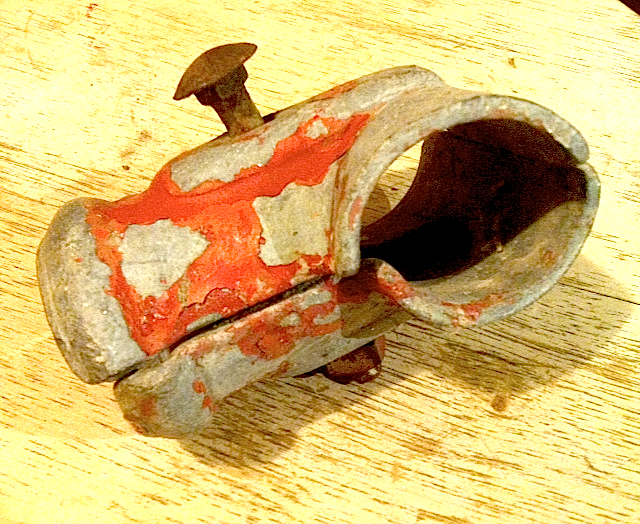
On my explorations, I found my own bit of Moorabbin to take home with me, 2 inch tubular fencing tee piece coupling, with red paint peeling. This was well captured again by Hurwitz’s painting on the left.


Here’s the outer side of the Moorabbin footy ground; the wooden seats on the fence for those early enough, looked down upon by the now demolished scoreboard and timeclock. In a great piece on the Moorabbin scoreboard, Vin Maskell looks at it’s history, and where portions of it are now scattered!


Old footy grounds were not just protected by barbed wire. Officious and over-zealous signage adorned many on old venue, and it’s hard to imagine it not been written by a gnarly old stallwart. Consider the following examples…the second is from the collection of Tim Best, a Saint fan who used to sell the footy record outside the ground!


And what post on Moorabbin would be complete without at least a view from one of the most notoriously vicious and parochial patches of terracing Australian Football has know, the old Animal Enclosure. The name says it all, it was not for the feint-hearted! Here’s a wonderful piece on the Animal closure by Paul Daffey.

Photograph by Tim Best. For more of his photographic take on Moorabbin Oval, click HERE.

While the Saints now train at the Seaford version of Linen House Oval (I liked how ‘Linen’ was so close to ‘Linton’) they still maintain a presence at Moorabbin. Only the Huggins stand remains, yet where terraces and stands once stood, there are now grassy embankments, maintaining the feel of how it once was. With light towers erected for baseball in the 1990’s, Football Victoria could do worse than considering it as a home for VFL football, however I can’t see this eventuating.

The Saints now play at the Docklands, which is far closer to their birthplace, St.Kilda, than Moorabbin, Waverley and Seaford combined. Yet a ‘home ground’ in Melbourne is nothing more than a token gesture these days, and nothing will match the days at the Junction and then Moorabbin. But that’s progress, progress which can be traced back to the Saints pioneering move to Moorabbin in the first place. Leaving wasn’t easy in 1992. There was much supporter angst, yet to no avail. Again consider the words of Matthew Hardy when it came to the last match at the ground in 1992.

And here’s a great clip from the last day at the ground.

g

So to sum up the Moorabbin Football Ground as a league venue, I will simply say this…

HERE FOR A GOOD TIME, NOT A LONG TIME

With a little help from my friends…

As always….http://stats.rleague.com/afl/venues/moorabbin_oval.html

Artist & Pies fan David Hurwitz. Please contact him if you are interested in any of his remaining Moorabbin works. They’d make a sensational addition to the Saints fan collection. You can visit his website and contact David. http://www.davidhurwitz.com.au

All photographs by John Carr unless otherwise stated.

Home and Away Glog!

Just what is a glog? Great question. It’s kind of like an interactive way of displaying….oh heck, just have a look at one!

Home and Away Glog

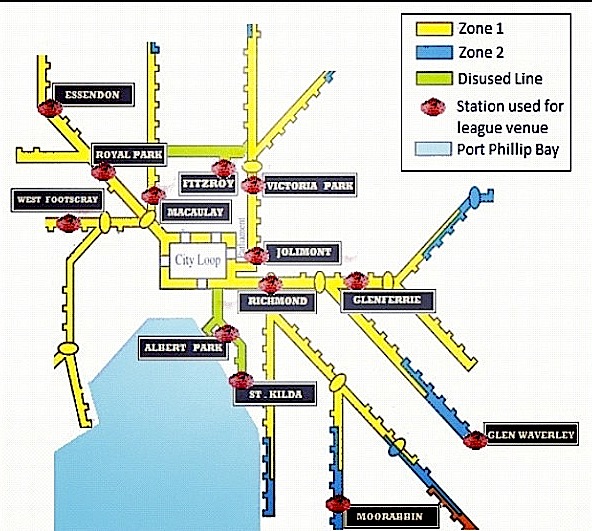
Unfortunately it is ‘un-embedable’ at this point, so a screen shot will have to. Below you can see what I’ve done, it’s a map of the rail network in Melbourne (adding in the defunct train lines in MSPaint) with a little footy on all the stations of the traditional Melbourne league venues. Great. But once you’re in the gloggy thing, click on the footy and you get taken to my post on that particular ground.  

 I haven’t gotten around all of the grounds as yet, so if you click on a station/footy and nothing happens, then just sit tight, I’m getting through them. There’s a Moorabbin one brewing as we speak!

Once I’ve finished my series on the old VFL grounds, it’s then to the VFA and beyond!

May Glog bless you one and all