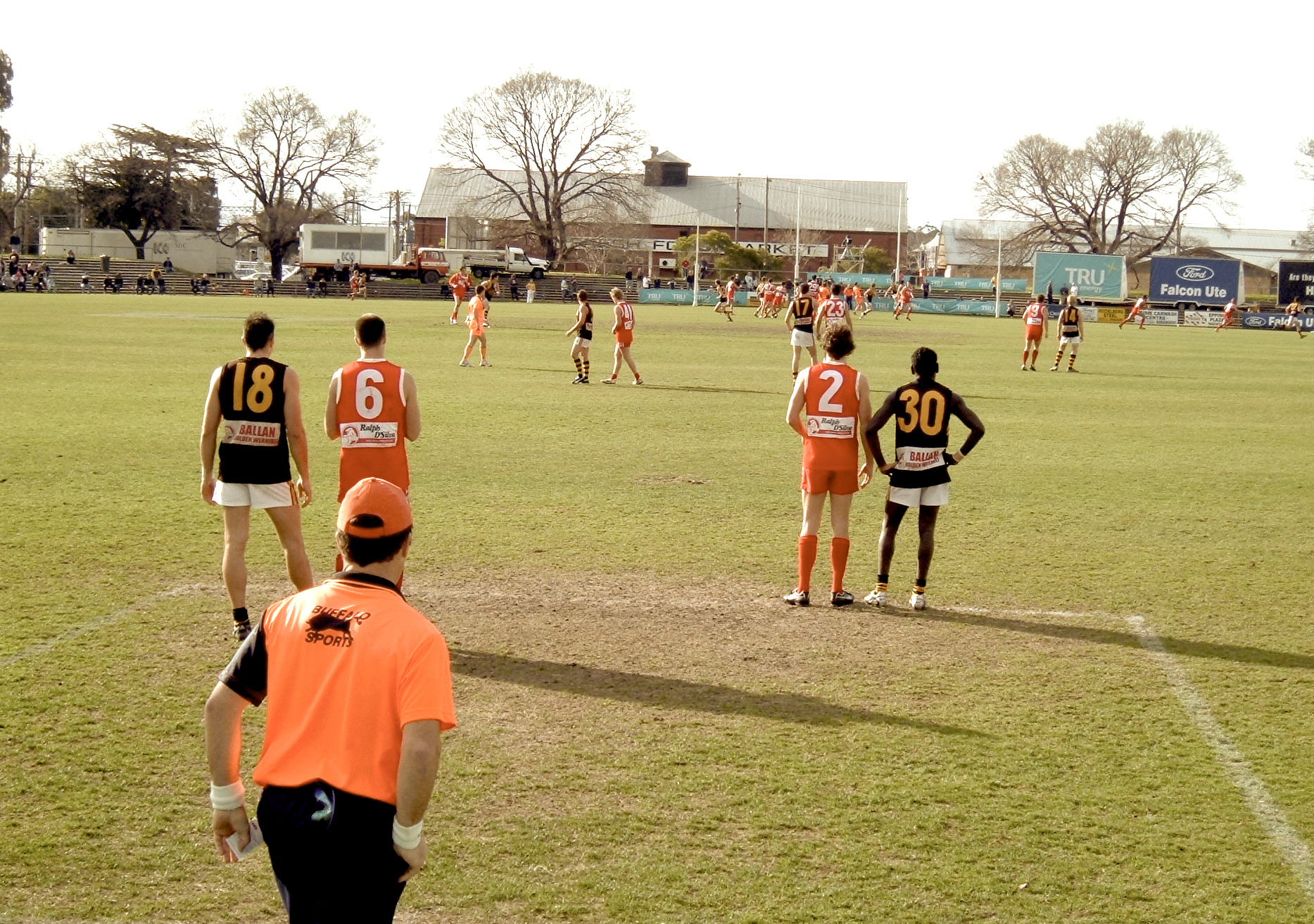
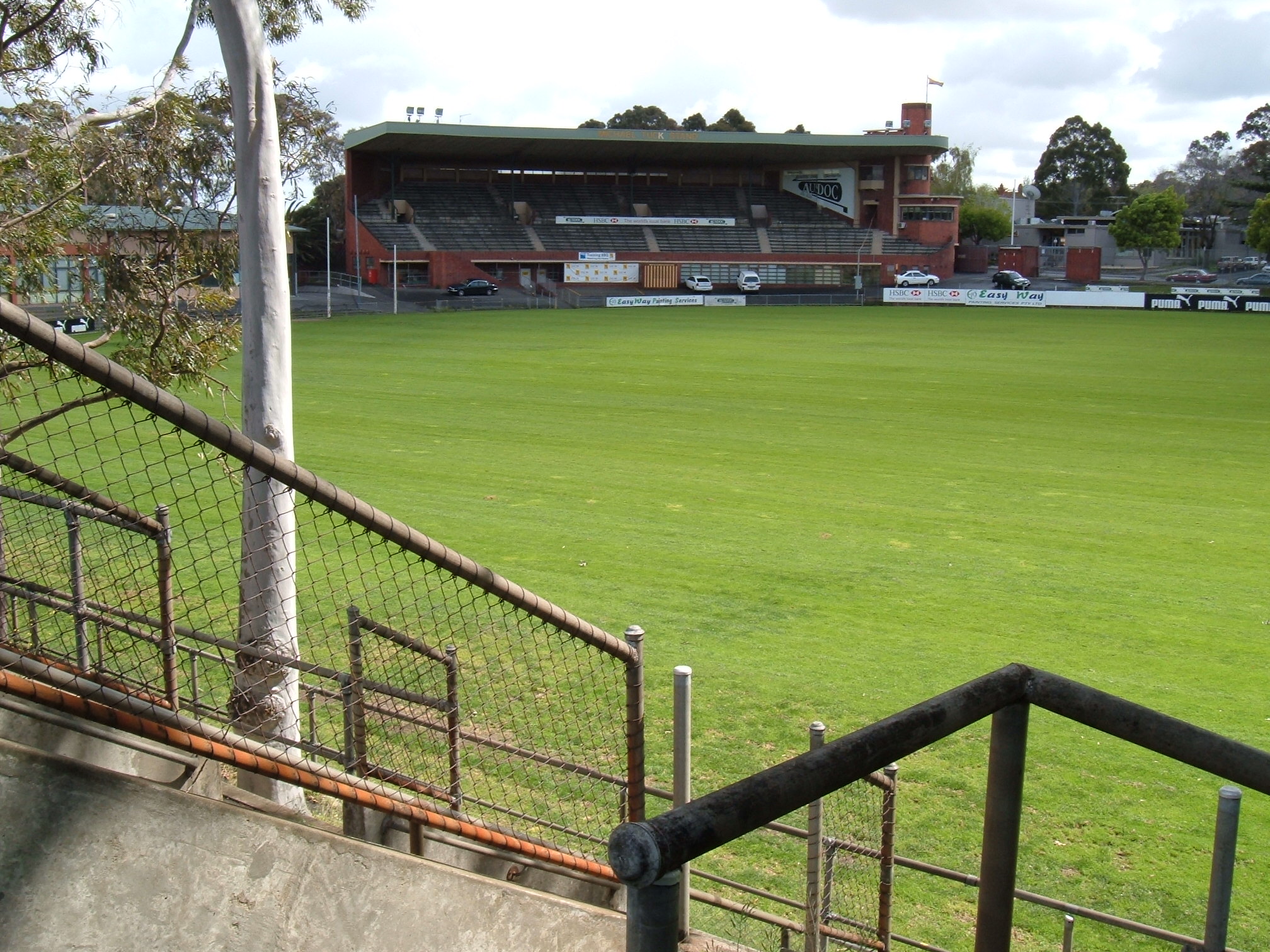
I took this photo at the 2005 round 20 match between the Bullants and Werribee in the VFL. Both teams had good years, and eventually played off against one another in that years preliminary final. With top 4 positions still up for grabs, this match seemed a forgone conclusion as I took this picture, with the final term about to begin and the home side, “Preston”, a good 40+ points to the good. Yet Werribee rallied, and stellar quarters from J-Pod (no.18, far left, now with Geelong) and Patrick Bowden saw the Bees pull off one of the more remarkable wins of recent time in the VFA/VFL.
We now come alphabetically in our ‘mock-punk’ style footy theme songs to Brisbane, but as brother Pete and I were still upset at the Brisbane-Fitzroy “merger”, very fresh in 1997, we opted for Fitzroy’s song instead. I unfortunately took lead vocals on this one…I’m not sure the French would approve!!! And remember, the ‘theme-songs’ session took place in our bedroom using cassette 4-track and took no longer than an hour. The quality is questionable, but that was kind of the idea!
Here is Pete’s ‘typical’ Brisbane supporter from around the same period of the late 1990’s, done in MSPaint. You can imagine this fellow either on the hill at the Gabba or in the old Lions social club. He obviously has no affiliation with Fitzroy, and clearly has sunk many a XXXX! Go Bears!
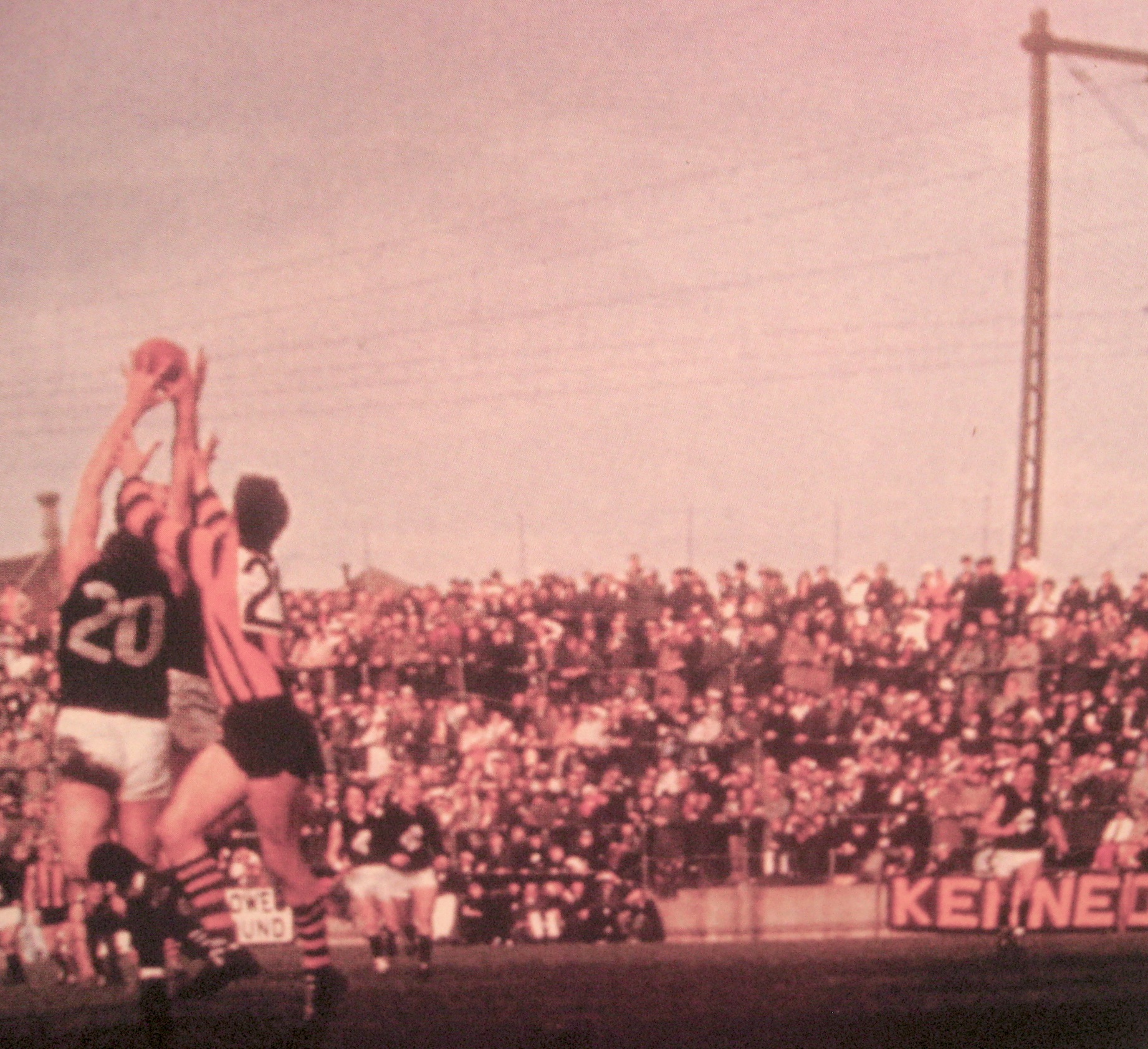
Glenferrie Oval: League venue: 1925-1973. League (VFL/AFL) matches: 443. Record Attendance: 36,000-Haw v Carl, 1965.
This is part 2 of my series ‘Home and Away’- a look back at Melbourne’s grounds
Glenferrie Oval. I must have passed it by train a thousand times. I’ve heard many a father trying to convince their unbelieving youngsters that Hawthorn actually used to play games down there on that skinny patch of grass, my own father included. It is hard to imagine that 36,000 once managed to cram into that space.
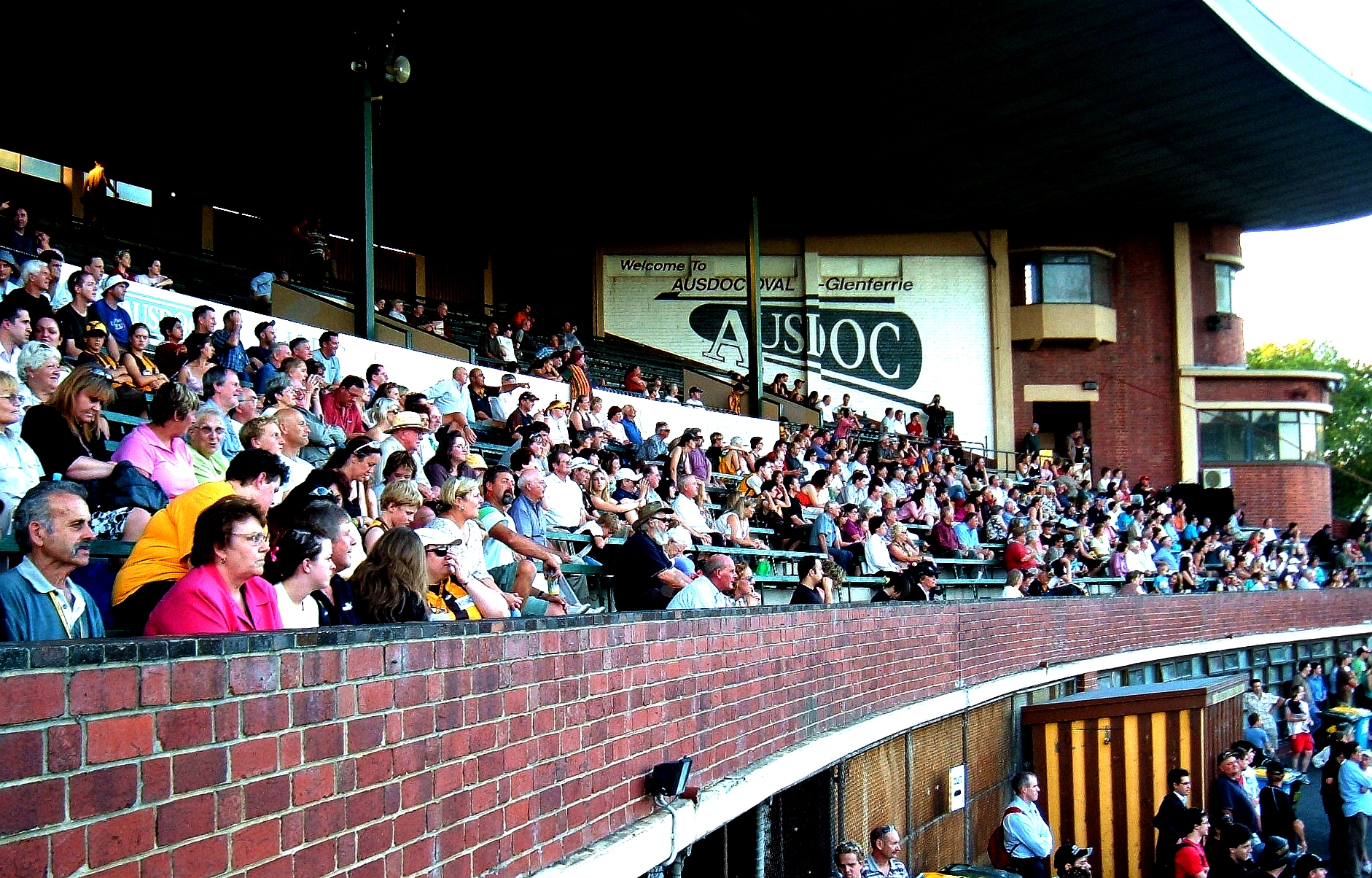
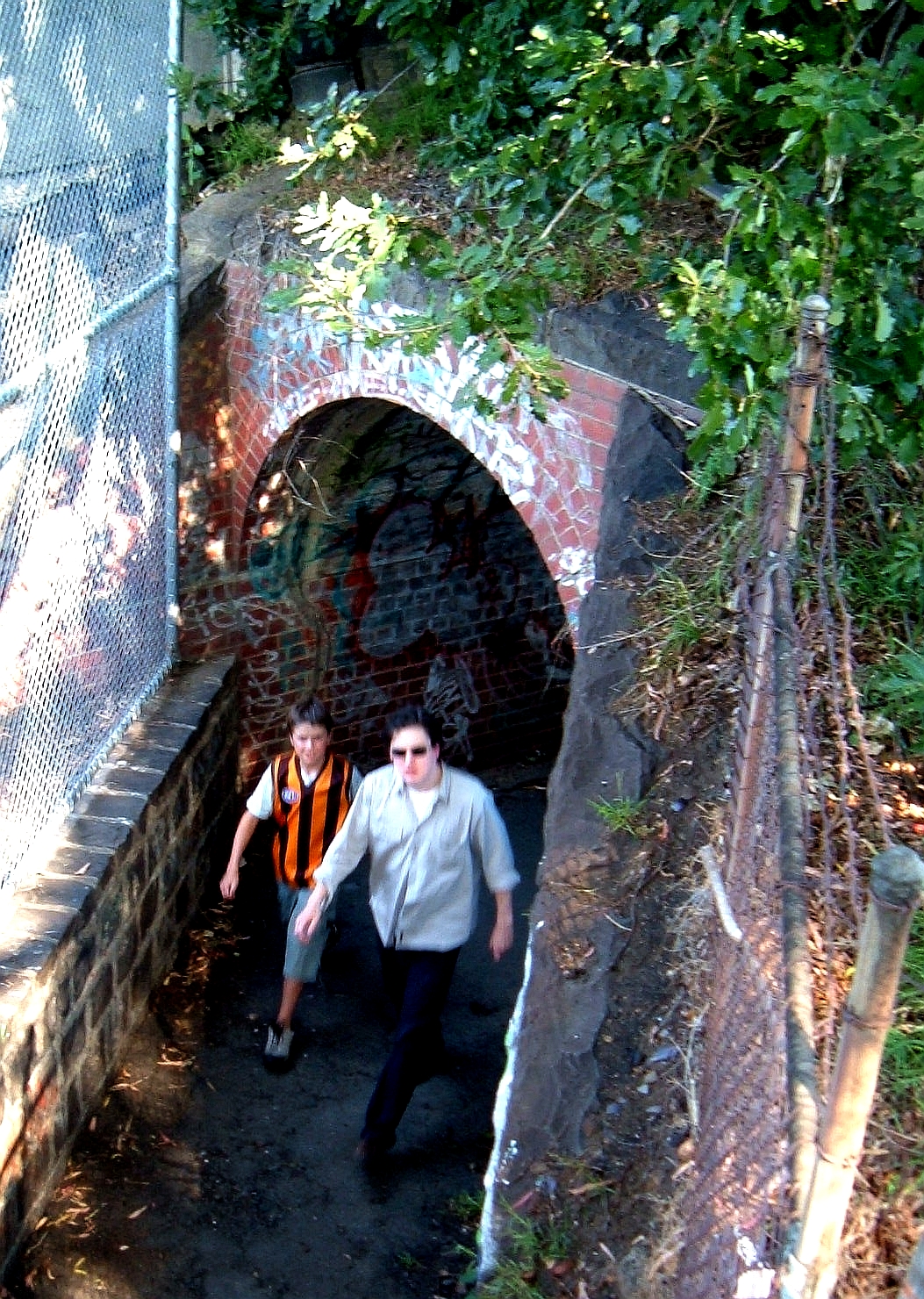
Surely the most unique of Melbourne’s league football grounds, Glenferrie Oval was opened in 1906, the Hawthorn Football club finally settling there after numerous homes previously. Flanked by train tracks and Linda Crescent, the oval took on an unusually narrow shape, and spectator facilities on the wings were rather creative.
Hawthorn, until recently, had one of the smaller followings of the Melbourne clubs. Having joined the league along with Footscray and North Melbourne in 1925, with the VFL nearly three decades old, these three clubs found it hard to attract large supporter bases. While North and Footscray still struggle with this, Hawthorn’s astonishing success from 1961 (10 flags and at the least one flag in each decade since) has finally seen it become a genuinely big club. It was the first of the three 1925 “newcomers” to outgrow it’s original home, leaving in 1973. However until that point, Glenferrie Oval had been apt in its size.
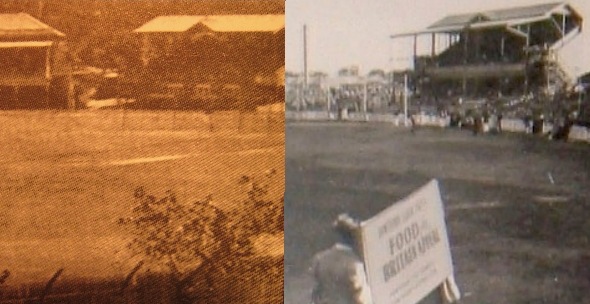
The grounds first main grandstand, as opposed to pavilion, was an old wooden stand transported to the ground from the old East Melbourne Cricket ground upon it’s demise in1921, standing until the 1960’s, when it made way for the Dr A.S. Ferguson stand…which has since been cut in half!
Above is the old wooden stand, East Melb C.G on the left, later at Glenferrie on the right. Below is the Dr Ferguson stand, which has been neatly halved since its glory days.
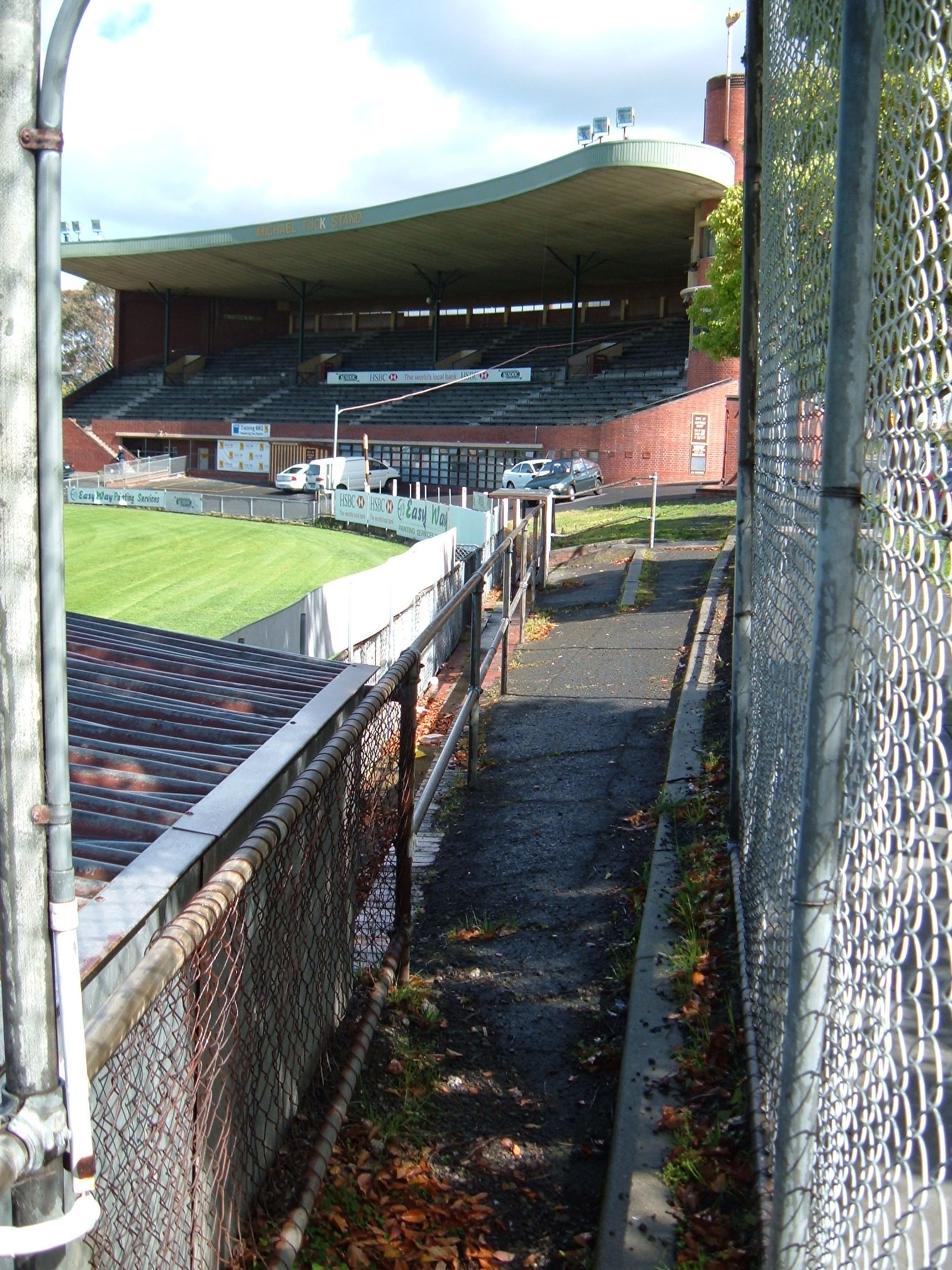
The classic art deco styled Michael Tuck stand, built in 1938, was clearly given it’s name in retrospect, as Michael was still some decades from making his debut. The ‘red-brick stand’ as it was known, to me defines Glenferrie Oval. It is superb. Just walking up the stairwell and into the upper tier actually gives me goosebumps. My wife does not understand this phenomenon.
It oozes cinematic charm and elegance, a far cry from the simplistic yet still charming stands which adorned the more working class suburban grounds. The stand has gained recognition world-wide for its unique design and is acknowledged as an art deco design of significance.
On one of my trips to Glenferrie Oval to take pictures several years ago, I was snooping around as per usual. I’m always looking for that odd little feature which I’d never seen before. Amid my treasure hunt, I was startled by an older guy who popped his head through one of the grandstand nooks to ask what I was doing. My natural thought was that I was an imposition, about to be told in no uncertain terms to buzz off. With Hawthorn still using the ground as a training facility, my Richmond polo shirt would surely not aid my cause.
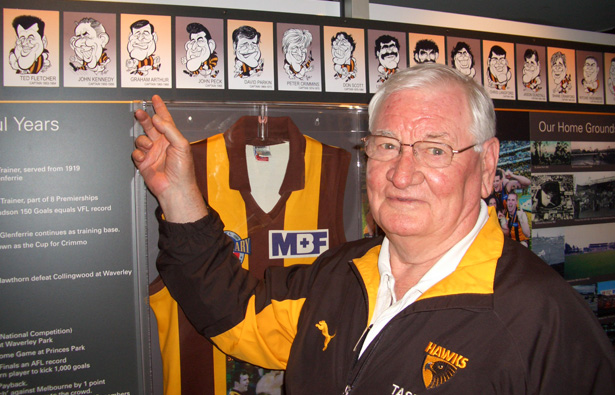
However my anxieties were soon at ease, as this gentleman was clearly no threat. In fact I recognised him instantly as Graham Arthur, captain of Hawthorns first flag in 1961. And what did he want? He wondered if I’d like a tour through the ground. Wonderful. I hadn’t let on as yet that I knew who he was, and he’s not the type to parade himself around. Introducing himself simply as Graham however confirmed my near-certain suspicion.
Graham Arthur, still helping the club out at Waverley Park. Photo courtesy or hawthornfc.com.au
As we wound the narrow corridors of the old red-brick stand, it was as if in a time warp. There were signs of current day things, players boots lying here or there, but the walls were filled with old stories. Graham led me around, showing me this and that, still not feeling the need to let on who he was. I’m sure he assumed I wouldn’t have know him anyway, yet I have a keen feel for the games history and study it religiously.
Up musty stair cases, winding this way and that, we came to a room out the back where the trainers put on a barbecue and beer night after training every Thursday. Players, Graham told me, were often in attendance. The very notion in the present day seems preposterous, yet it was a different place and time. It was in this room that Graham took me to a picture on the wall of a young strapping man, clad in brown and gold, sending the air-conveyence closer to goal. I was sensing a reveal.
“You see that bloke there? Well, you’re talking to him right now.”
Very humble, almost embarrassingly so. I played along with him, feigning surprise, though I still reacted so that he knew that I’d heard of Graham Arthur, to give his ego a little boost. Graham and I continued over to the Dr. Ferguson stand, plain on the outside, yet housing a past players bar and a comprehensive Hawthorn museum, since transported to Waverley park. We finished the ‘tour’, which I must add I paid nothing for, over the road at the old Hawthorn social club, since sold off and demolished. I thanked Graham immensely, and continued on my way. Graham Arthur was so easy to talk to and very humble, and the fact that in retirement he returned to his club to contribute says something about him.
But back to the oval. The Sardine tin, as it was affectionately known, was one of the earlier suburban grounds to bite the dust. With no room to expand the playing surface or spectator facilities, the ground always had a limited lifespan. The Hawks have left, and upon my recent travels past the old ground, it’s looking a bit sad. The turf was the first thing to fall by the wayside, and whilst I am far from impressed with the amount of advertising at AFL grounds, jumpers, shorts, even the Sherrin, this tired little ground seemed somewhat lifeless now that even the advertising hoardings no longer lived there. I guess it served as a stark reminder that Glenferrie Oval no longer plays a part in league football.
While the future of the ground is somewhat uncertain, what with it being prime real estate, thankfully the red-brick stand carries a heritage listing, meaning it at least will be safe. And as the years go on and I pass the ground with my own rug-rats in toe, I’ll point out the high-rise suburb that used to be Glenferrie Oval, with the seemingly out of place art deco grandstand to the side of it and say…
My brother (@carr_pete on twitter) and I spent much of the 90’s playing music and watching football, so what better way to combine the two than record the footy theme songs…in mock ‘punk’ style! The sweaty 1997 recording session took place in our bedroom using cassette 4-track and took no longer than an hour. The quality is questionable, but that was kind of the idea! As you’ll hear…we just guessed any words we didn’t know. The pre-pubescent voice is my younger brothers. And I’ll kick this series off in alphabetical fashion, with Adelaide’s song.
Included is a series of pics my brother Pete did in MSpaint at the time of a typical fan from each club. Take no offence…please!
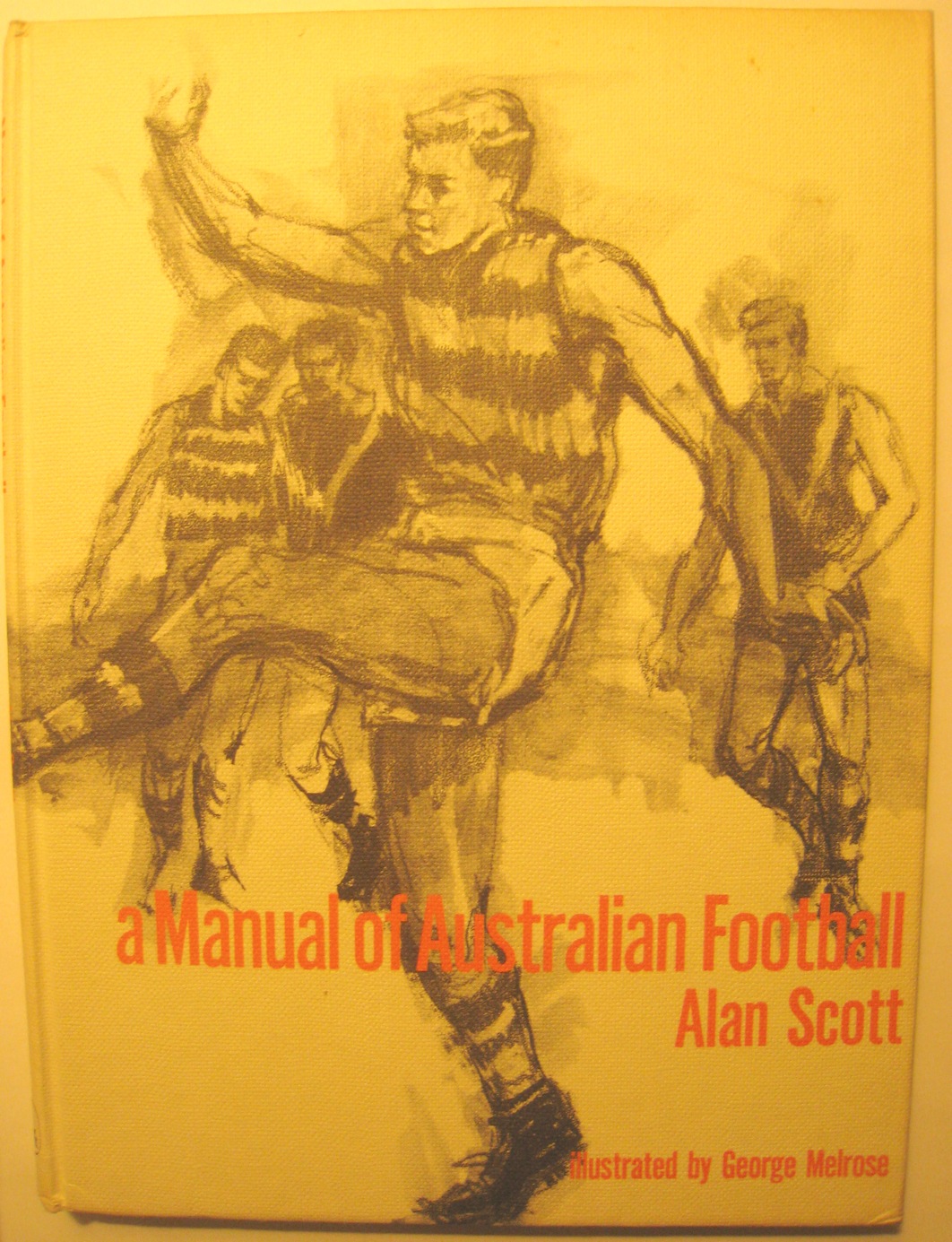
During a routine scanning of the books down at Savers, my eyes came across this plainly clad instructional book on how to play our great game…Australian football. The author’s name, Alan Scott was unfamiliar, and a brief spot of research confirmed he had never played league football. On further inspection of the book, I learned he was housemaster and coach of Ballarat College First 18 football team, and “a successful junior coach at that.”
Published in 1965, this is one of the earliest instructional books on Australian football, with then VFL president Sir Kenneth Luke saying in his introduction that “when we reflect that our game of football was established more than a century ago, the shortage of authoritative manuals of instruction is astonishing.”
It was a momentous year for Australian football. To my thinking it signalled the beginning of the modern game. Footy in Melbourne had meandered along essentially untouched by progress for decades. Yet money was about to become the ‘name of the game’, and fittingly, the last of the amateur clubs, Melbourne, won their most recent flag in 1964! The 1965 season also saw Ron Barrassi shock the football world by transferring from Melbourne to Carlton, utter sacrilege at the time, yet a sign of things to come.
Dramatically, not one but three clubs left “home” in 1965. Richmond, North Melbourne and Fitzroy moved to the MCG, Coburg and Princes Park respectively. Clubs had stayed put for the past 80 odd years, with exceptions in Geelong leaving Corio Oval for Kardinia Park during World War 2 and the Dons 1922 move from East Melbourne to Windy Hill. Things would never be the same.
The game itself had also been somewhat static to this point, though tactics were beginning to evolve from what had previously been a ‘kick it long, go back over your mark’ game plan. Suffice to say, this book was written on the cusp of great change and serves as a neat time capsule of how the game was.
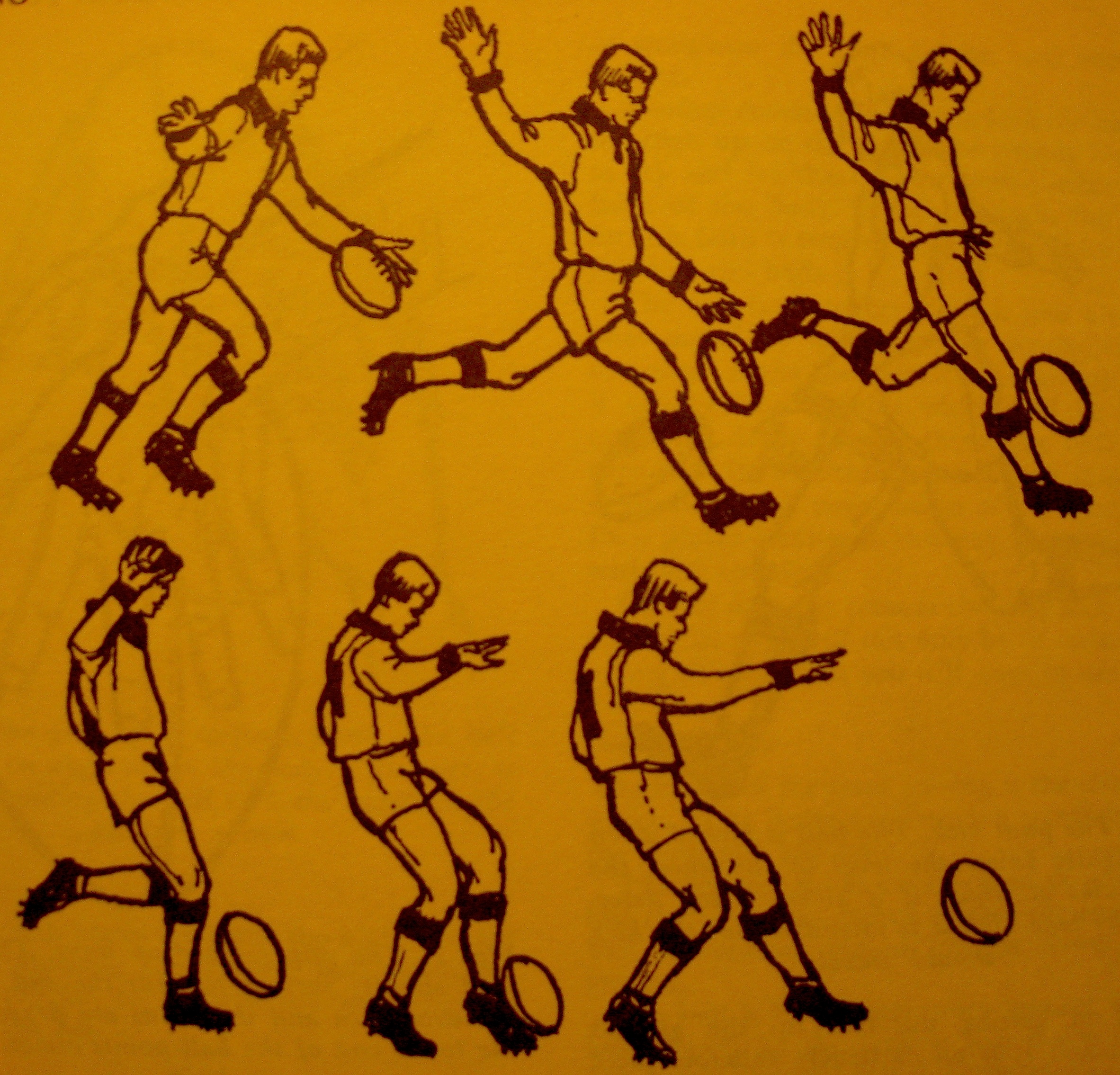
It should be recognised that in 1965, though still a simplistic sport, great artistry existed in the required skill-set, with many glorious features now lost. Today, all a footballer needs in their weaponry is a drop punt. Yet Scott explains the finer points of the different ‘kicks’ used ….the drop kick, the long drop pass, the stab pass, the punt kick, the torpedo and even the place kick all get a mention! Of course the drop punt is included.
It’s clear that Scott was unable to forecast the dramatic change about to take place, as the drop kick would be extinct within a decade. Barassi’s move to Carlton as playing coach would have a lasting effect on football. Apart from the 1970 grand final comeback, where he instructed his team to play on at every opportunity and use handball offensively, the 514 game coach equally had a lasting impact on the way we kick.
“I was amazed when I began coaching how little was thought of the basics of the kick.” Barassi freely admits that he’s partly responsible for phasing out the graceful drop kick, but is unapologetic.
“It’s the reliability of it (the drop punt)…the drop kick is harder to do. And the torpedo kick has always been a chancy one.” Of course he was not alone, with many contemporary coaches moving in the same direction.
The torpedo punt managed to avoid this kicking genocide, with season 2011 providing it with somewhat of a renaissance. Scott raises an interesting point with the torpedo punt. “Because it is possible with practice to make a torpedo punt swing in the air, it is a valuable kick to use when you are kicking for goal on a sharp angle.” As an example, forward this video to 2:05 and watch former Brisbane star Darryl White do exactly that.
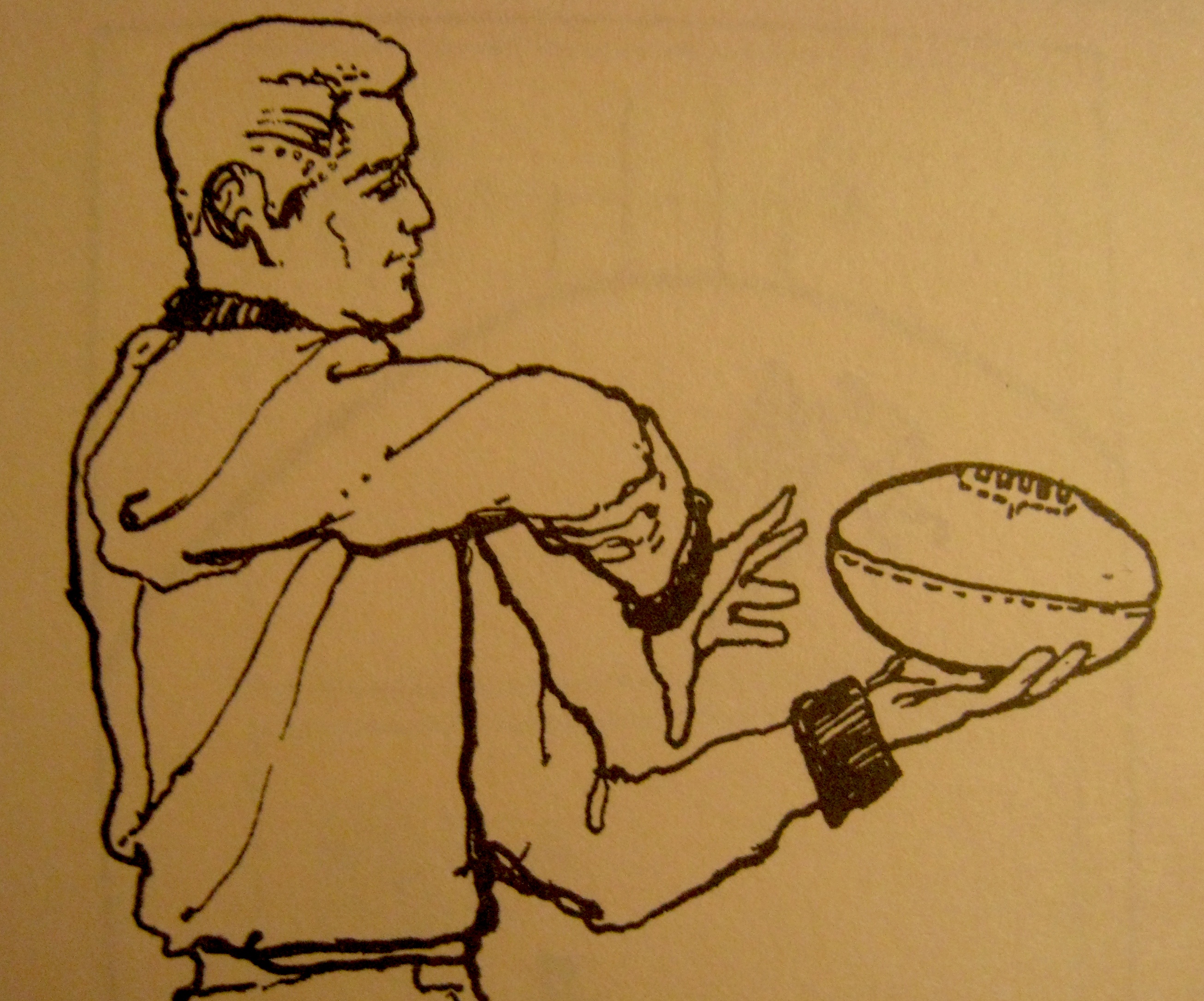
While Scott may not have anticipated the streamlining of kicking, when it comes to his chapter on handball, he seems able to see where the game was headed. “There are many boys who regard handball as a last resort when they have no hope of getting a kick….handball can be used as part of a team’s attack-that is, as part of the teams method of getting the ball up the ground.” Ironically, players these days often appear to use a kick as a last resort!
There is also instruction on how to perform a flickpass, though the following year, 1966, saw it officially outlawed, as it was too difficult for umpires to detect if the ball had been thrown or struck. The Adelaide Crows attempted to reintroduce this when they entered the AFL with their version dubbed the “Crow-Throw!”
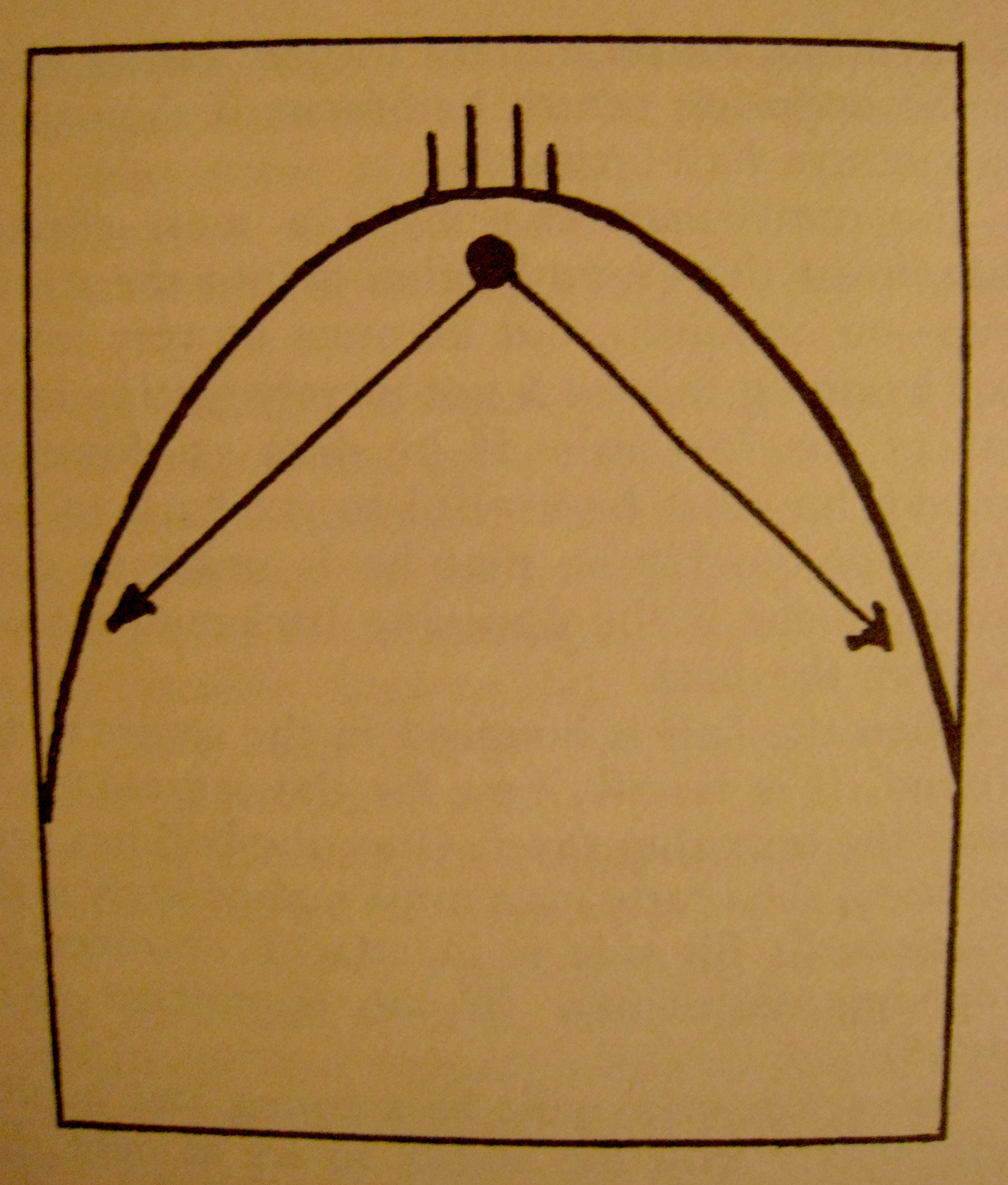
Many other subjects are covered in the manual of Australian Football, including “Running, Swerving, Turning and Spinning,” where we learn the fundamentals of evasion. A chapter titled “Position Play” gives an indication of the rudimentary nature of the games tactics. Here is all a fullback needed to know about his kicking out duties for instance.
Throughout the book, you are reminded time and again that its author is a school housemaster, such is the authoritarian nature of Scott’s ‘advice’ and the life values he incorporates. Consider the following…
“The game must be seen in its right perspective, no boy should allow football to so dominate his life that he is unable to concentrate on anything else.” Where was that advice when I was a lad? Truly addicted now.
“To lose your temper is quite contrary to the whole concept of sport.” Again true, and a life lesson there as well!
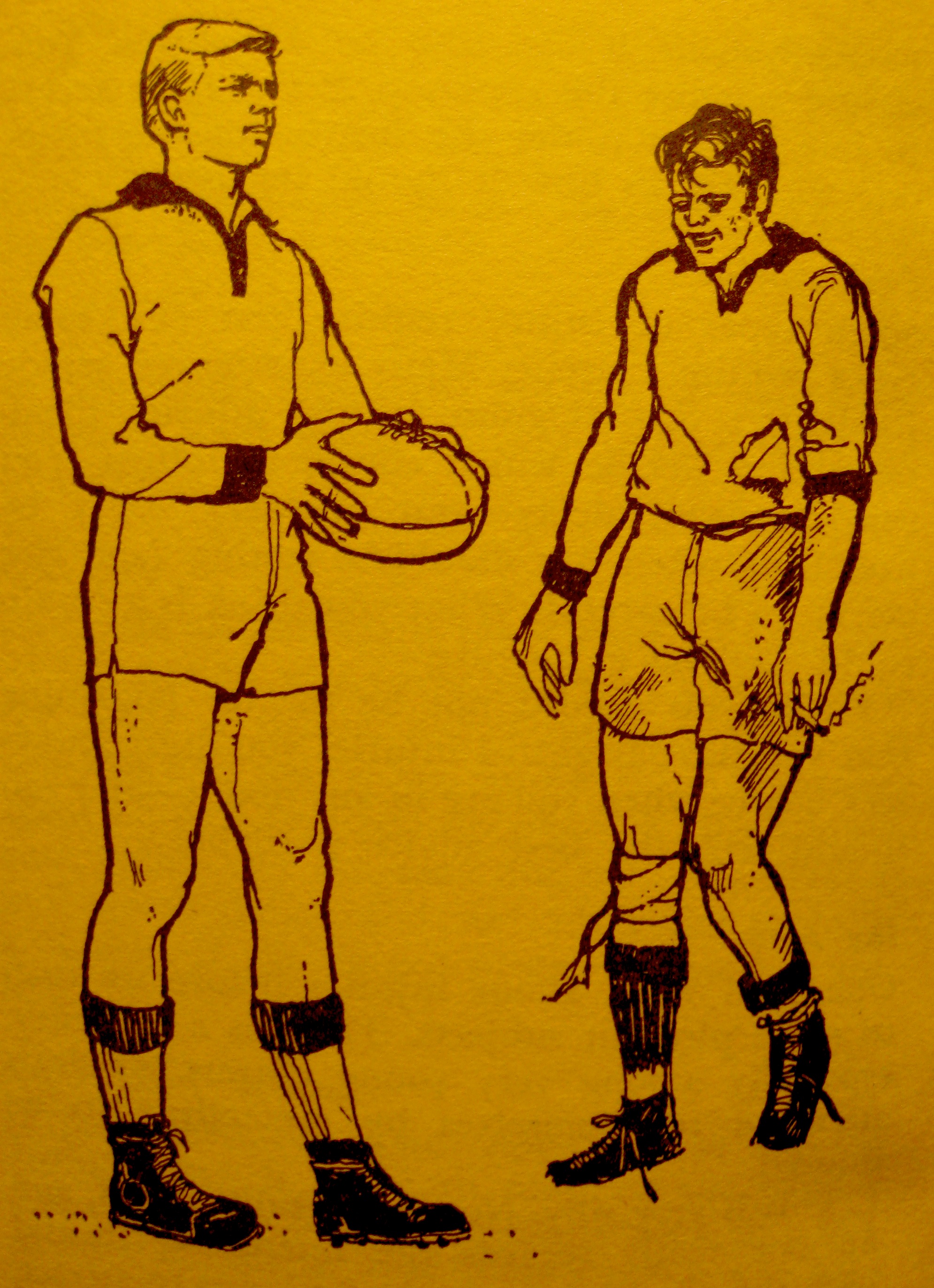
“You should wear the uniform of your team proudly. A slovenly player gives a bad impression” Now illistrator George Melrose deserves special mention for this piece.
It’s the yesteryear version of James Hird standing next to Brendan Fevola! Note the lit cigarette and drunken grin!
“There is a tendency among young players to draw attention to themselves by pretending to be injured. This is very silly. No one is really fooled!” Sorry sir. Won’t happen again sir.
And lastly some health advice “…avoid constant between-meals eating of sweets, make sure you drink plenty of milk and be moderate in your consumption of fatty foods.” However…
“Do not be discouraged if you seem to be too small or too fat or too ungainly. One of the great things about Australian Rules is that there is a place for almost any physical type.”
Summing up, this book is a great record of how the game was not just played, but the manner in which it was used as a means of shaping students into upstanding citizens. At least that was the idea. And a final word from Alan Scott.
“…if you lose, say nothing. If you win, say less.” Now that I can agree with.
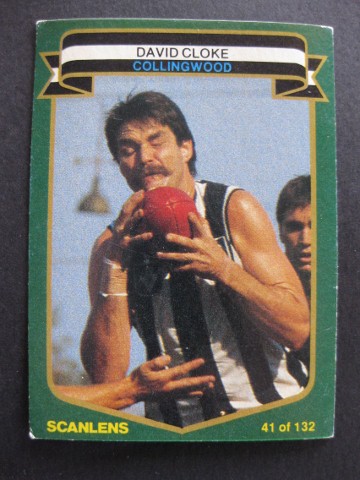
Former Richmond and Collingwood footballer David Cloke’s career was dominated by the number 3. So grab a calculator, abacus, your fingers or toes…whatever, and prepare to be awestruck!
David began his career with Richmond in 1974 wearing the number 33 on his back, the same number he took with him to Collingwood some ten years later. When he returned to Richmond he wore number 16.
Clokes career spanned through 3 decades…70’s 80’s and 90’s, and also he played in 3 Grand Finals.
Cloke kicked 333 career goals, and in his final 3 games, he polled 3 Brownlow Medal votes in each match!
Cloke was also a member of the 300 game club….his 300th a memorable affair with a surprise Richmond victory over Carlton!
Dale Weightman and Big Clokey celebrate the power of 3!
He played for 18 seasons and was 36 when he retired, both numbers divisible by 3!
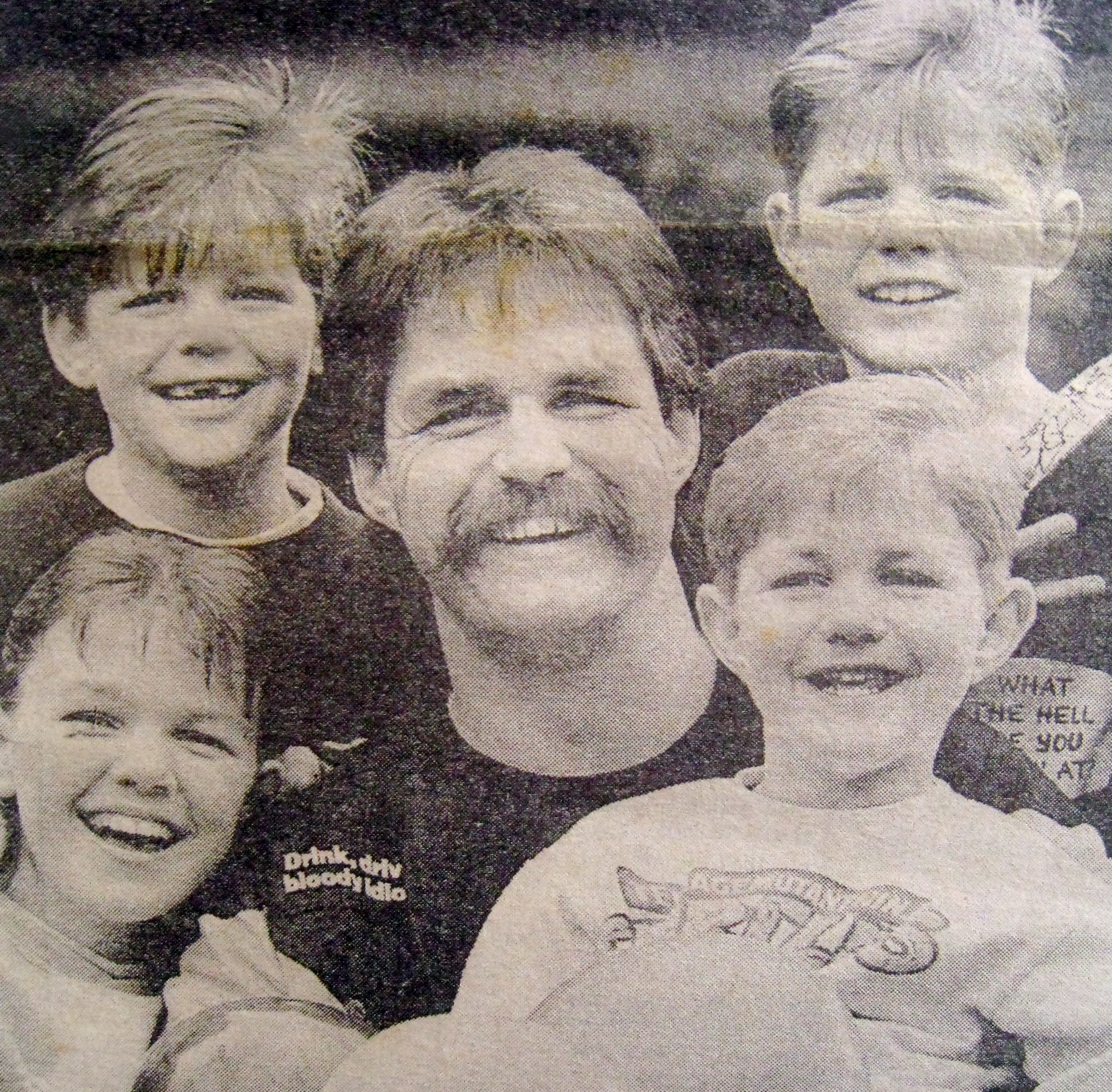
Famously, Cloke had 3 sons that played/play league football, each drafted under the father-son rule to Collingwood. They neatly wore or still wear the 3 numbers, 32 (Travis) 33 (Cameron) and 34 (Jason) that surrounded their own fathers number 33.
Now we get a bit nutty!
David Cloke gave away 33 free kicks in his first year (1974) and also in 1985. Son Jason gave away a career total of 33 free kicks in away matches only, while middle brother Cameron received a career total of 33 free kicks in home matches. Youngest son Travis is yet to join the 33 party, although as a left-footer amongst righties, he clearly doesn’t follow the status quo!
Some other 3’s that cropped up…David Cloke played 33 games against Fitzroy, something his sons will clearly never achieve.
Cloke also played just 3 games at Cararra, now Metricon Stadium.
Cloke senior kicked 3 goals in his last game for Richmond (1982 Grand Final) before moving to Collingwood, where in his first match he again booted 3 goals.
And finally, David Cloke’s final game for the Pies in 1989 saw him have 12 kicks, 6 marks, 6 handballs, for 18 disposals…and 9 hit outs. All stats are divisible by 3!
Interestingly, but not related to the number 3, David Cloke played in the 1990 Richmond v’s Carlton ‘Save our Skins’ legends match out at Windy Hill, only to come out of retirement and play on again in 1991!
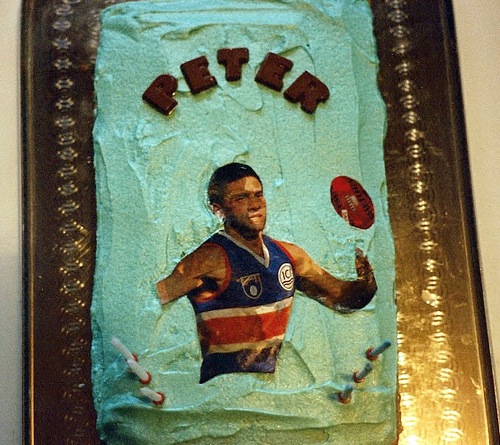
This is my little brother Pete’s 6th birthday cake, lovingly made by mum. Yes, we’re a multi-generational Richmond family, yet somehow he became a Footscray fan. And it stuck!
As my dad has been heard to say, “Surely this is the worlds only Tony Liberatore cake!”
Leauge venue: 1897-1964. League (VFL/AFL) Matches: 613 Record Attendance: 34,765-Fitz v Ess, 1923.
This series of ‘Home and Away’ posts are a look back at Melbourne’s footy grounds to essentially see what’s left. Whether it be an old entrance gate, a grandstand or perhaps just a plaque, I’ve searched high and low for whatever remains I can find.
These posts will essentially be based on a wide range of photos i took a good six or seven years ago when I had the time! I’m glad I did take them because much has changed in that short period.I’m starting proceedings by looking at Fitzroy Football Clubs ‘spiritual’ home, the Brunswick Street Oval.
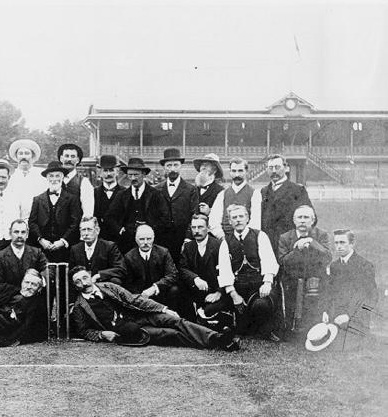
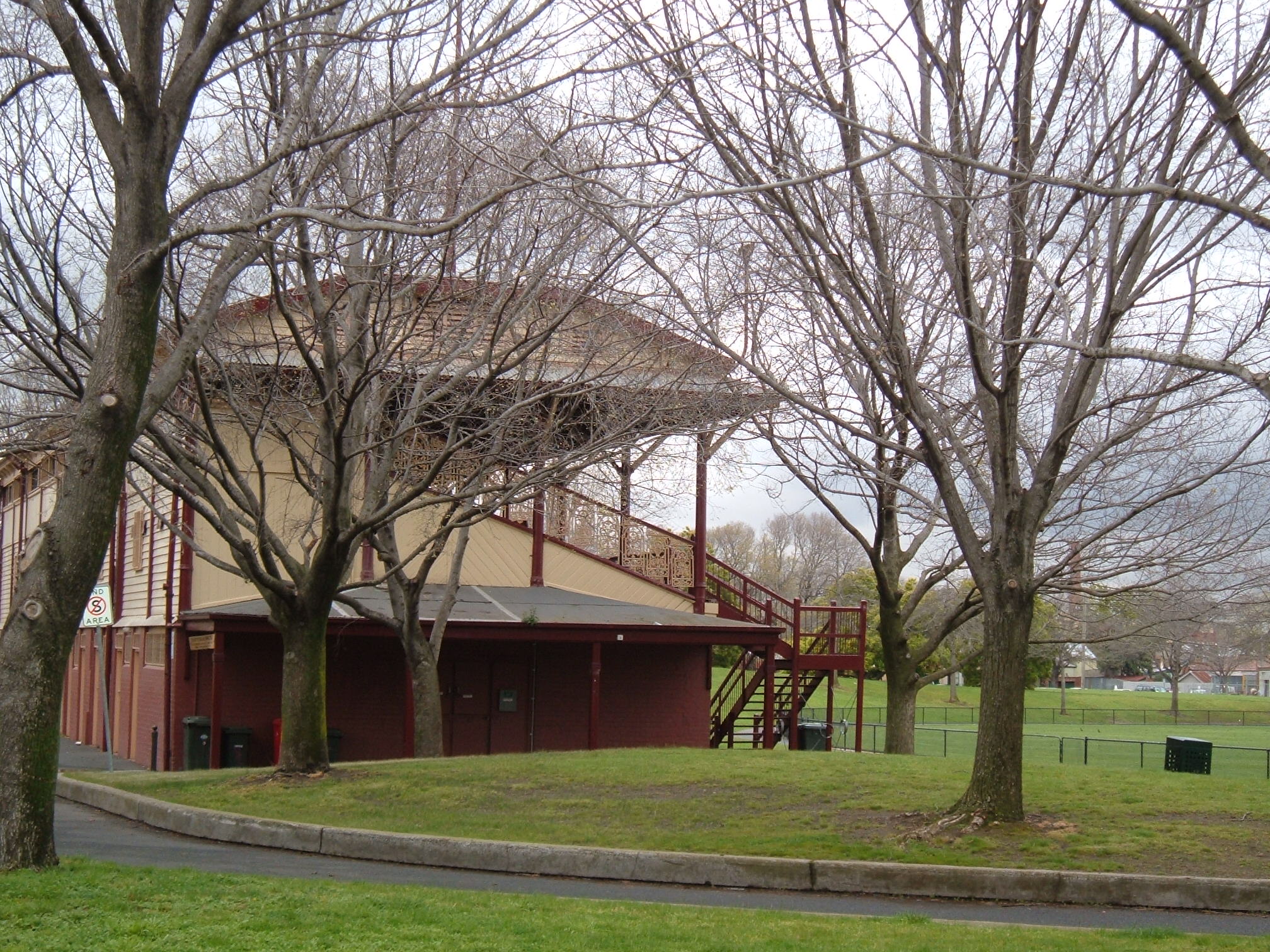
Here is a shot of the old cricketers stand which still stands, taken in 1920. To the left stood it’s ‘sister’ or the football stand, which was destroyed by fire in 1976.
The cricketers stand today.
The land which became the Brunswick Street oval was set out for recreation in Fitzroy, Melbourne’s oldest suburb, in 1862, and as every other suburban football ground, began life primarily as a cricket venue. The Fitzroy Football club was formed in 1883, entering the VFA, the top league of its day, the following year. Naturally, the football club called Brunswick St. Oval home.
The VFL broke away from the VFA in 1897, and Fitzroy was one of the 8 founding clubs. In fact the Roys were the leagues first powerhouse, winning four of the first nine premierships. Early days of the VFL also saw finals shared between the grounds, and Brunswick St hosted 4 finals between 1897 and 1906. The club was able to build its own grandstand alongside the cricket stand in 1905. These were prosperous days for Fitzroy and the Brunswick St oval, however it was to be the last ‘development’ of the ground. By the time it ceased to act as a league ground after 1965, not much had changed.
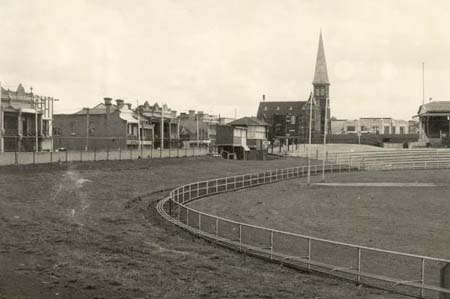
Photo courtesy of Michael Gorey at http://gorey.com.au/ And here’s my picture from essentially the same forward pocket.
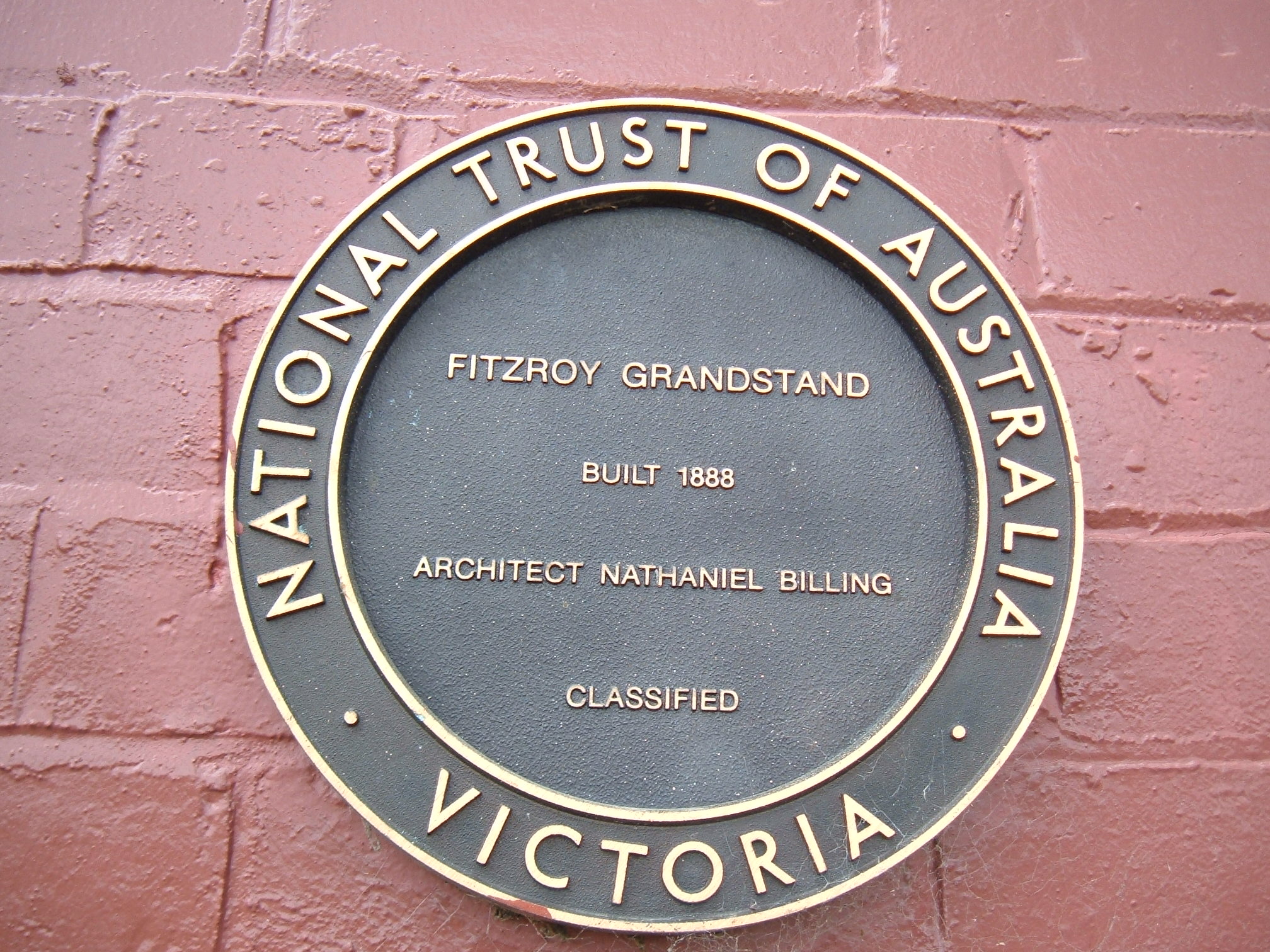
Fitzroy continued to train at the ground before moving their headquarters to South Melbourne’s Lakeside Oval. The cricket club continued on until a dispute with the local council which saw them merge with and move to Doncaster, rendering the ground essentially useless. The facility was opened to the public and local soccer was played there for a time in the late 1980’s. The cricketers grandstand thankfully was listed as a heritage building by the national trust of Australia.
The 1990’s saw the ground once again used for football, with VAFA club Uni Reds playing their home matches at the old league venue. Unfortunately the Fitzroy Football club ceased to exist as a league club at the conclusion of 1996, but the Uni Reds soon became the Fitzroy Reds, adopting the Lions old jumper. In 2008, the Reds officially merged with the old Fitzroy Football Club, meaning the the Roy boys, though no longer in the spotlight of the AFL, are back home where it all began.
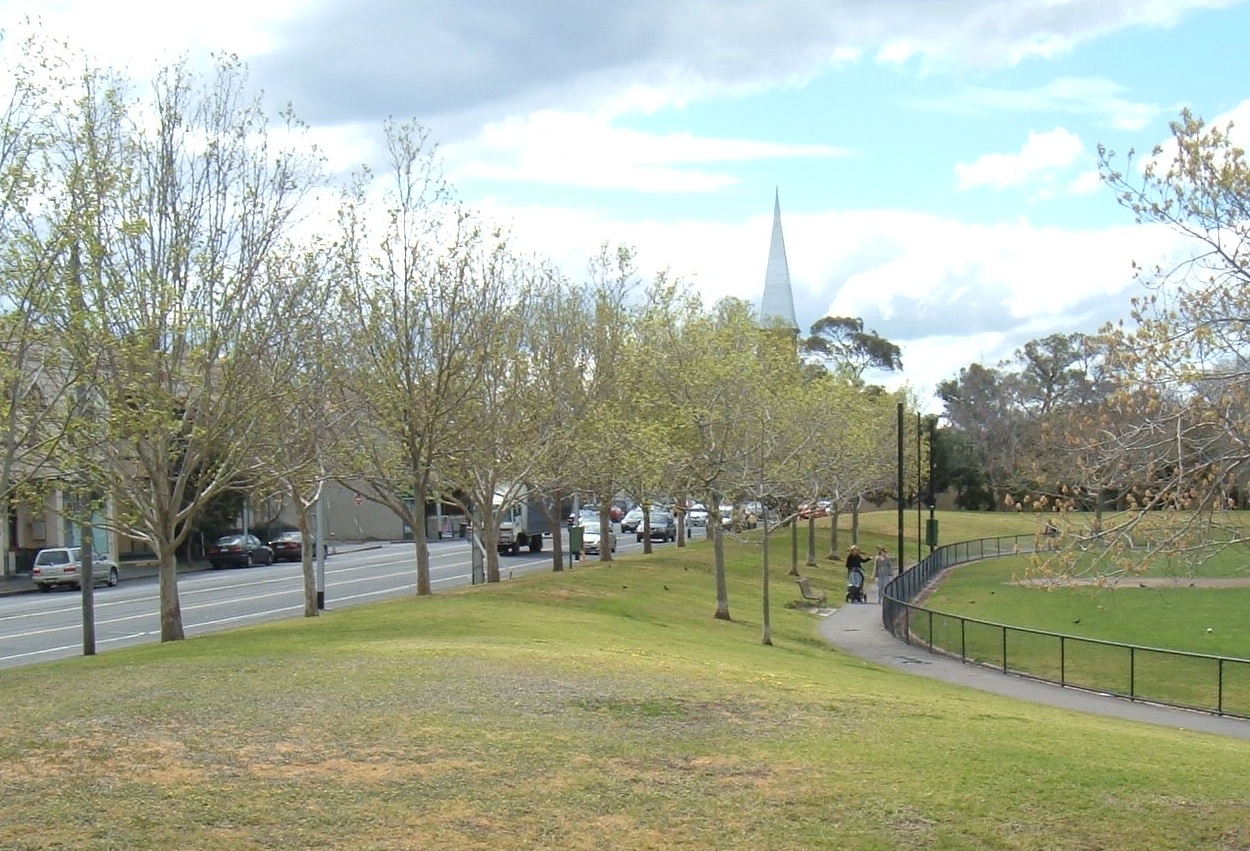
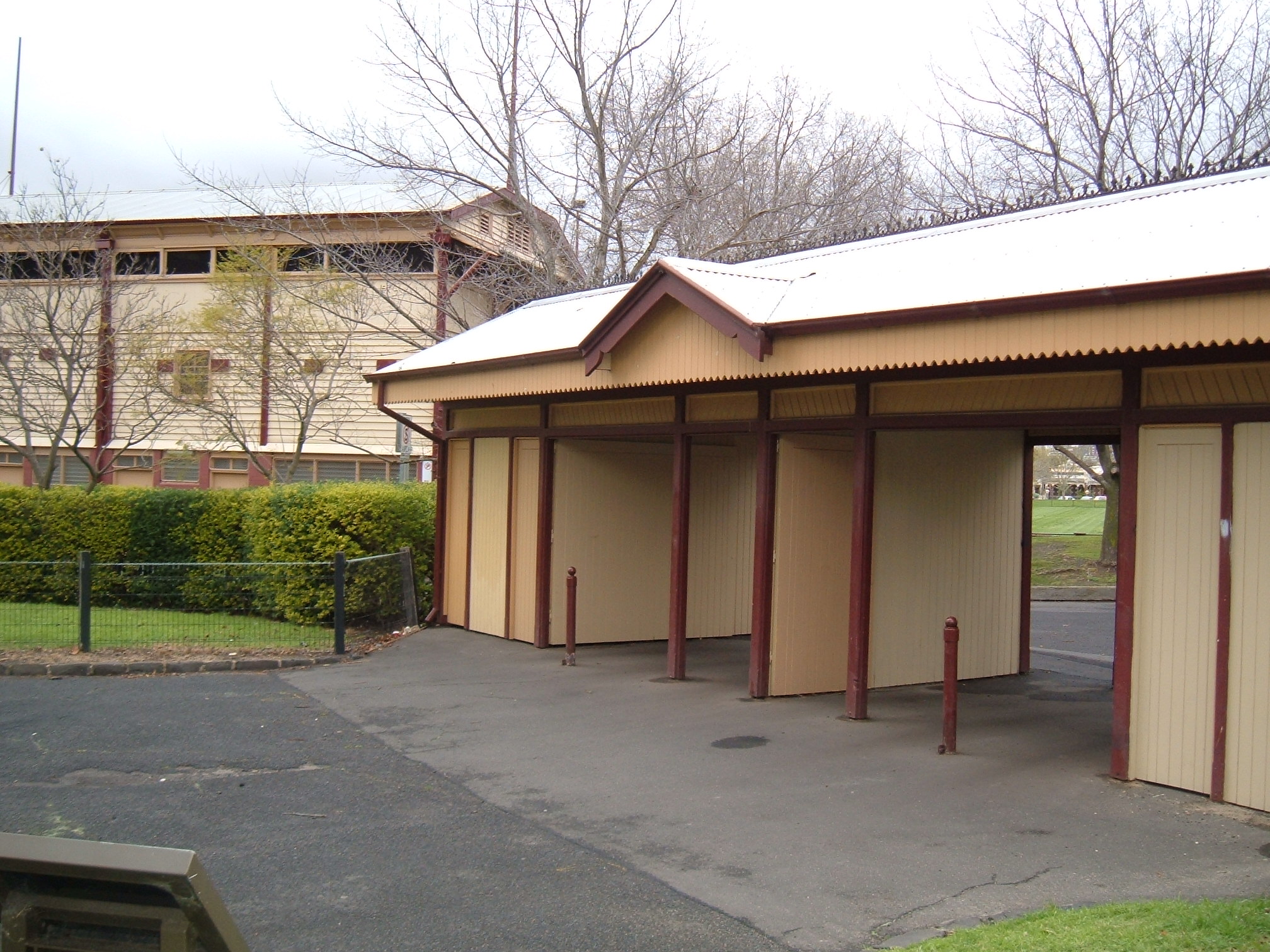
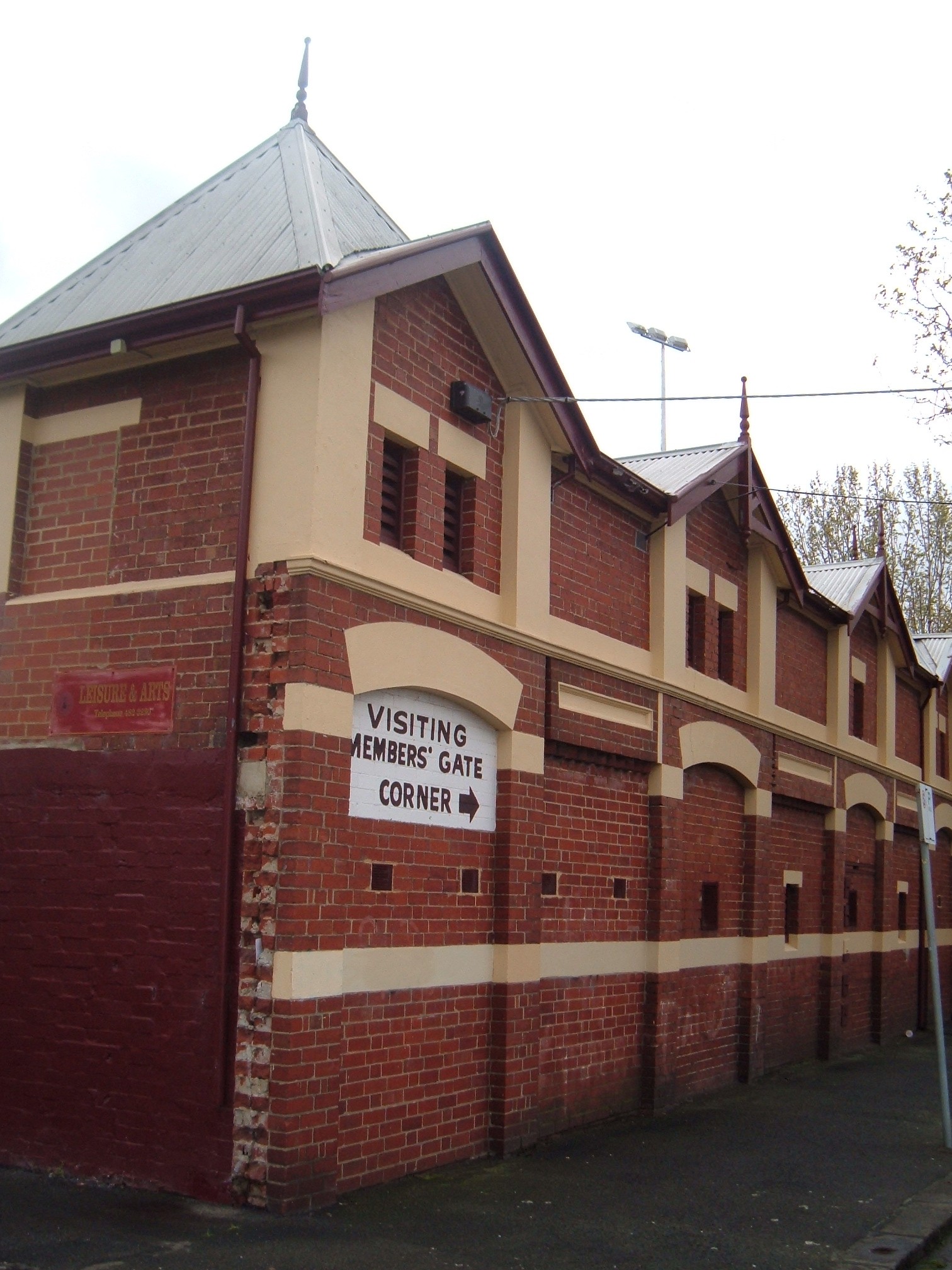
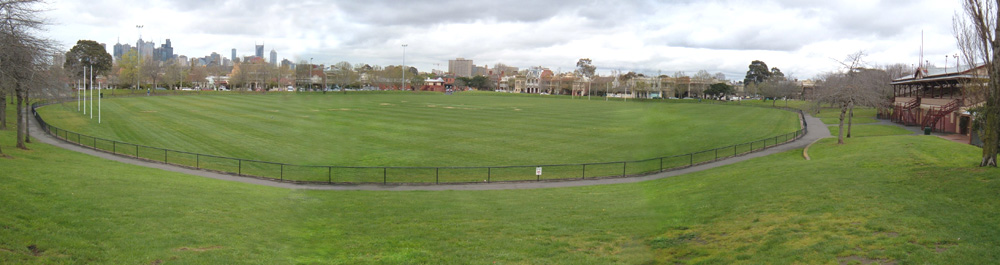
Here are some more shots I took of Brunswick Street Oval, now the W.T Peterson Community Oval
With a little help from my friends:
-Marc Fiddians ‘Forever Fitzroy-a history of the Brunswick St Oval’
-Stephen Rodgers 1982 edition of ‘Every Game ever Played’
-Chris Donald’s “Fitzroy, for the love of the jumper.’
The season 2010 saw a remarkable statistic crop up in Richmond’s attendance figures which, to this point, is yet to be publicly recognised. After round 3, Richmond’s attendances were as follows……giving the Tiges an average attendance figure of 42,594. Then the unthinkable happened. Richmond’s round 4 fixture against Melbourne at the MCG saw exactly 42,594 people attend, meaning that Richmond’s exact average crowd to that point in the season came through the gates. Now I would have been amazed had the figures been close, but to be spot on left me dumbfounded. I keep a season spreadsheet full of all sorts of bits and pieces, and I had to enter the data several times before I realised what was happening! Now that’s what I call a “nice statistic!”
The year 1990 saw Richmond’s Michael Mitchell win both the mark and goal of the year. Here is his mark against Fitzroy on Anzac Day (yes, Richmond v Fitzroy on Anzac Day!) I was at the ground as a wee fellow in the top deck of the old southern stand, and remember the mark vividly. The video does not do it justice! This was taped by my nana and pa as we didn’t have a VCR as yet! Enjoy














 The Holy Boot's Football Emporium